
-Atiku’s flip-flop on fuel subsidy removal
By Kunle Wizeman Ajayi
Atiku must have rehearsed extensively and held several meetings before arriving at his latest position. He must have gathered a team of PR professionals who probably told him: “Oga, you just have to lie your way through this. Subsidy removal don turn messy. The people are angry because it has destroyed their economic, social and personal lives.”
Then, the next thing you see in the media is the katikati 👇
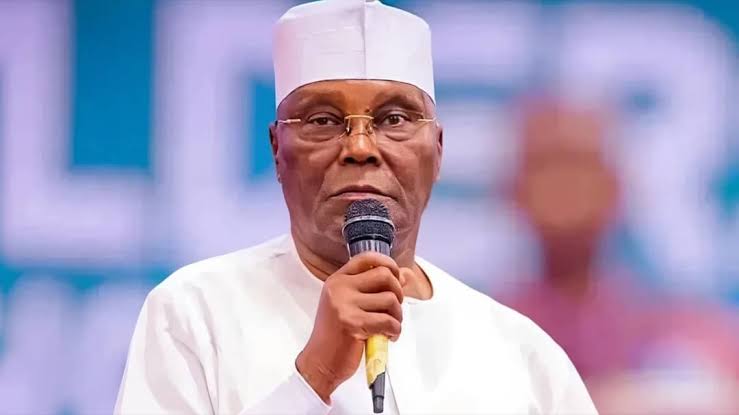
“I did not oppose the removal of the oil subsidy, but where is the money? Where did it go? It was intended to reduce poverty and help children attend school. Where is the money now? It seems they are just stealing it,” Atiku said in Hausa.
He reportedly added:
“If elected, I will bring back the oil subsidy, and whoever stole the money must refund it.”
Atiku has also promised to review NELFUND and forgive the debts of students who have taken what he described as burdensome loans. He has further promised that Nigerians would not have to pay rent under his administration.
Read also
2027: Atiku vows to restore fuel subsidy, demands refund of ‘stolen’ savings
‘TINUBU IS 90!’ — ATIKU DROPS BOMBSHELL, VOWS TO PROVE IT IN COURT
But all of these promises follow a familiar pattern whenever Nigerians begin to demand a change of government. The ruling class packages another supposed alternative, guides its candidate through a new set of promises, and keeps repeating them until the people become accustomed to the narrative.
But how can we forget that Atiku Abubakar has long been associated with advocacy for subsidy removal and the privatisation of the Nigerian economy?
As Vice President under Olusegun Obasanjo, Atiku served as Chairman of the National Economic Council (NEC) and headed the National Council on Privatisation (NCP). During that period, major public enterprises were privatised through the Bureau of Public Enterprises (BPE), with Nasir El-Rufai playing a prominent role in the process.
Atiku, as Vice President, also established the American University of Nigeria in Yola, a private university where tuition is beyond the reach of many ordinary Nigerians. Therefore, his recent claims about building a university for Almajiris deserve closer scrutiny.
On housing, the Obasanjo administration, in which Atiku served as Vice President, did not deliver the kind of mass public housing programme that could adequately address Nigeria’s housing deficit. Instead, the administration largely promoted private-sector participation in housing and the commercialisation of public assets.
Atiku Abubakar now appears determined to sell himself to Nigerians as the answer to the very problems his political generation helped create.
This is reminiscent of what happened with the late President Muhammadu Buhari. After campaigning heavily on “Change, Change!”, many Nigerians later accused his administration of failing to live up to several of its campaign promises.
Now that President Bola Tinubu is facing growing public discontent over the rising cost of living, with petrol prices placing enormous pressure on households, Atiku’s handlers appear to be repositioning him as the champion of the people.
But can Nigerians really forget his earlier positions on privatisation and subsidy removal?
The same Atiku who was famously quoted in 2011 as saying he would sell the refineries to his friends now wants to present himself as the defender of Nigeria’s collective oil wealth. No be juju be that?
Truth remains constant.
And if we truly want to identify those who stand for the truth, we must examine how consistently they have stood by their positions over time—not merely what they say when elections are approaching.
This is why, in my view, the only presidential candidate who has remained consistent in his position on fuel subsidy is Omoyele Sowore of the African Action Congress (AAC).

Kunle Wizeman Ajayi is a labour activist and poet, was an #EndSARS Organiser at the Alausa barricades. He is the Deputy National Secretary of the African Action Congress , AAC.
About The Author