
DUBOIS vs WARDLEY 2: HEAVYWEIGHT WAR RETURNS AS BOXING FACES A BRUTAL QUESTION
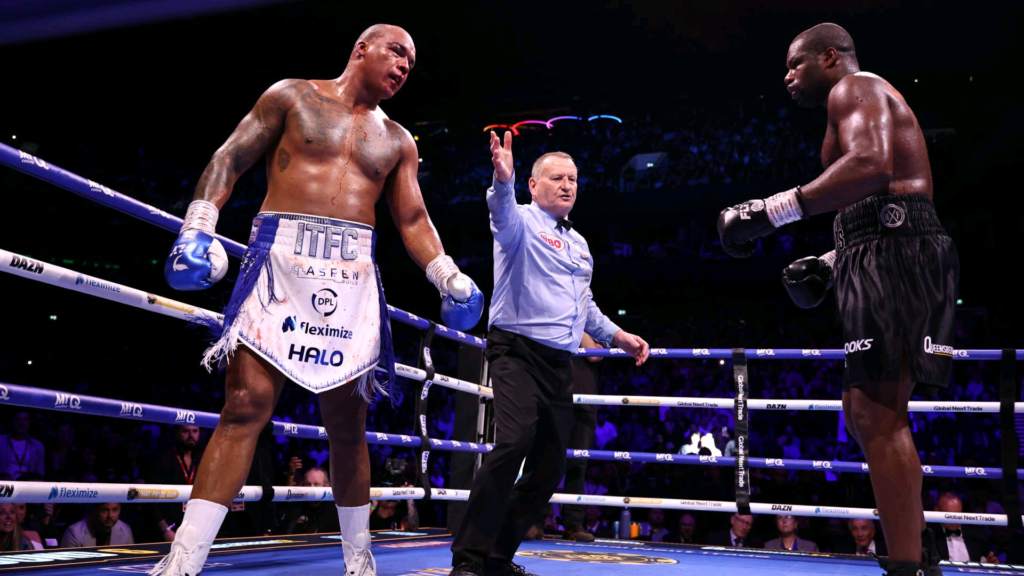
Daniel Dubois and Fabio Wardley are ready to go to war again after their bloody 11-round classic sparked outrage, welfare concerns and calls for boxing to draw the line. But with the WBO heavyweight crown on the line, should the rematch be celebrated or questioned?
Boxing fans love a knockout. They celebrate courage, power and fighters who refuse to surrender. But when a heavyweight battle becomes so brutal that a bloodied fighter can barely defend himself, the same fans begin asking an uncomfortable question: Has boxing gone too far?
That debate is returning to the ring as Daniel Dubois prepares to face Fabio Wardley for a second time on Saturday, October 17, 2026, with the WBO heavyweight championship at stake.
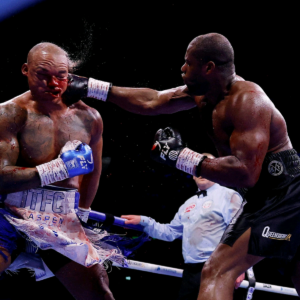
Their first meeting was not just another heavyweight contest. It was a savage, unpredictable slugfest that saw two knockdowns, a stunning comeback and a dramatic referee stoppage that left fans divided over whether the fight should have ended sooner.
Now, months after that unforgettable night, the two British heavyweights are ready to settle their differences again.
And while anticipation is building, so are concerns about the punishment Wardley absorbed the first time around.
FROM FIRST-ROUND SHOCK TO AN 11TH-ROUND STOPPAGE
When Dubois and Wardley met on May 9 in Manchester, few could have predicted the extraordinary drama that followed.
Wardley exploded out of the blocks, flooring Dubois with a huge right hand within the opening 10 seconds. The champion appeared to have landed the perfect statement of intent, putting his opponent under immediate pressure.
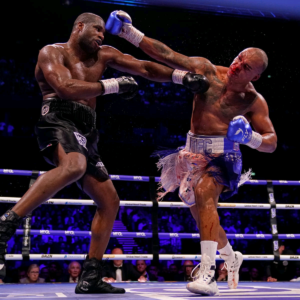
Then came another shock in the third round.
Wardley dropped Dubois again with a powerful right hand, raising the possibility of a quick and decisive victory.
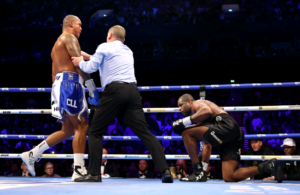
But Dubois refused to fold.
The London-born heavyweight recovered, began firing back with punishing combinations and gradually turned the contest into a brutal battle of endurance. The man who had been sent to the canvas twice was now forcing Wardley to absorb wave after wave of heavy punches.
Wardley, however, would not go down.
Even as the damage mounted, he continued trading punches. His nose was badly damaged, blood covered his face and his right eye became almost completely swollen shut.
The fight had become a spectacle of extraordinary courage but also an increasingly uncomfortable sight.
Then, 28 seconds into the 11th round, referee Howard Foster stepped in to stop the contest.
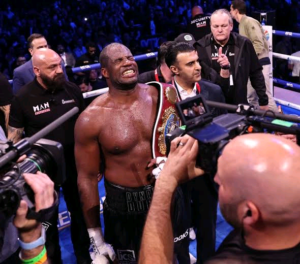
Wardley was still standing, but he was struggling to defend himself effectively. Dubois was declared the winner, claiming the WBO heavyweight title and becoming a two-time world champion.
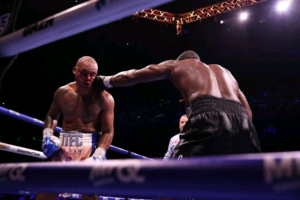
Wardley sank to his knees, devastated. Dubois celebrated a victory that had required him to overcome two knockdowns and answer fresh questions about his toughness.
It was a dramatic reversal of fortune — and one of the year’s most talked-about heavyweight fights.
FANS CELEBRATED THE CLASSIC, BUT QUESTIONED THE REFEREE
The reaction was immediate.
Many fans hailed the contest as a potential Fight of the Year, praising both men for their willingness to engage in a relentless heavyweight war. Dubois earned admiration for surviving the early knockdowns and mounting a comeback, while Wardley was praised for his courage and refusal to quit.
But the celebration came with a serious question: Should the referee have stopped the fight earlier?
Wardley’s swollen eye, heavy bleeding and inability to defend himself properly prompted concern among viewers who believed the punishment had become excessive.
Others argued that the referee had to balance fighter safety with the realities of professional boxing, where competitors are trained to withstand pressure and fight their way back into a contest.
That disagreement has become central to the build-up to the rematch.
For some, another meeting is exactly what boxing needs: two dangerous heavyweights, a world title and unfinished business.
For others, the first fight was a warning that should not be ignored.
Both arguments deserve to be heard. Boxing is built on courage and competition, but protecting fighters must remain a priority.
WHY ARE THEY FIGHTING AGAIN SO SOON?
The answer lies in unfinished business, championship ambition and a rematch clause that gave Wardley a route back to the man who took his title.
Wardley did not waste time contemplating retirement or rebuilding against a lesser opponent. He activated the rematch clause and made it clear that he wanted another opportunity to reclaim his championship.
His message was unmistakable: he believed he had made mistakes in the first encounter and was determined to correct them.
There is also a sporting argument for the immediate rematch. Wardley had never previously lost as a professional, and his defeat by Dubois was the first major setback of an extraordinary rise through the heavyweight ranks.
Before their first meeting, he had already made a name for himself by stopping opponents when defeat appeared increasingly likely.
Against Justis Huni, Wardley produced a stunning late knockout after being outboxed. He also came from behind to defeat Joseph Parker in a dramatic contest that helped propel him into the world-title picture.
Those performances established his reputation as a fighter who could change a fight with one punch.
Dubois, meanwhile, had his own reasons to welcome another meeting. The champion now has an opportunity to prove that his comeback victory was no fluke and that he can defeat Wardley without allowing the challenger to dictate the early exchanges.
The rematch is therefore more than a commercial attraction. It is a direct test of whether Wardley can adapt, whether Dubois can repeat his success and whether the first fight revealed a decisive advantage for either man.
DUBOIS VS WARDLEY: THE NUMBERS BEHIND THE WAR
Dubois is the defending WBO champion. His comeback victory over Wardley made him a two-time world heavyweight champion while Wardley, the challenger is seeking redemption after suffering the first defeat of his career.
These are two heavyweights with serious finishing power. Dubois entered the rematch with 22 knockout victories, while Wardley had stopped 19 opponents. Neither man needs a points decision to make a statement.
The first fight demonstrated that both can hurt the other. Wardley put Dubois down twice, but Dubois ultimately became the first man to stop him.
That is what makes the rematch so compelling: Wardley knows he can hurt the champion, while Dubois knows he can survive Wardley’s best shots and turn the fight around.
WHAT IS AT STAKE ON OCTOBER 17?
This is a fight that could reshape the heavyweight division.
For Dubois, victory would reinforce his position as WBO champion and strengthen his claim to another major showdown in a division crowded with ambitious contenders. He has spoken about his desire to pursue further elite-level challenges, including the prospect of facing Tyson Fury.
A second victory over Wardley would make it harder to dismiss his first win as a one-off comeback.
For Wardley, the stakes are even more personal. He wants his title back, his first professional defeat avenged and the world reminded that one brutal night does not define his career.
Another defeat would raise difficult questions about his ability to overcome Dubois. A victory, however, would transform the story of their rivalry and could establish Wardley as one of the division’s most resilient champions.
The WBO heavyweight championship is the prize. Reputation, momentum and future blockbuster fights are also on the line.
BOXING’S BIG QUESTION: ENTERTAINMENT OR FIGHTER SAFETY?
This is where the argument becomes bigger than two men.
Boxing has always celebrated extraordinary wars. Muhammad Ali versus Joe Frazier, Arturo Gatti versus Micky Ward and Marco Antonio Barrera versus Erik Morales remain unforgettable because they combined skill, courage, rivalry and drama.
But nostalgia should not blind the sport to its responsibilities.
The fact that boxing has always been dangerous does not mean every dangerous contest should be allowed to continue. Nor does a fighter’s willingness to compete automatically settle every question about medical fitness and safety.
The right approach is not to condemn a rematch simply because the first fight was brutal. It is to ensure that the fighters are medically cleared, the appropriate safeguards are in place and officials are prepared to intervene when necessary.
There is also a contradiction in demanding that Wardley fight an easier opponent before facing Dubois again. If the concern is that he has not recovered sufficiently, his fitness should determine whether he fights at all, not whether his next opponent has a less intimidating name.
If he is fit and cleared to compete, Wardley should have the opportunity to pursue the rematch he wants.
THE VERDICT: LET THE FIGHTERS FIGHT — BUT DON’T IGNORE THE WARNING
On Saturday, October 17, Dubois and Wardley return to the ring at London’s O2 Arena, with the WBO heavyweight crown on the line. The rematch will be shown exclusively on DAZN.
The first fight delivered everything boxing promoters dream about: an explosive opening, dramatic knockdowns, a remarkable comeback, sustained punishment and a stoppage that sparked fierce debate.
The sequel has a compelling story of its own.
Can Wardley correct his mistakes and reclaim his belt? Can Dubois prove his superiority once again? And will the rematch produce another classic — or a more one-sided performance from the champion?
Those questions are reason enough for boxing fans to tune in.
But the sport must also remember that courage is not measured solely by how much punishment a fighter can absorb. Sometimes, the bravest and most important decision is to stop a contest before it goes too far.
Dubois versus Wardley 2 is a fight boxing fans have a genuine reason to anticipate. The challenge is to celebrate the competition without losing sight of the human beings taking those punches.
Because boxing does not have to choose between thrilling fights and fighter safety. It must demand both.
PLANET EXPLICIT | Boxing’s biggest fights. The stories behind the punches.
About The Author