
BBNaija Season 11 Is Over — But Did Nigeria Watch?

BBNaija has survived 11 seasons, but the quiet question after Temi Nkem’s victory is whether the giant is losing its grip on Nigeria or whether Nigerians have simply found other things to watch.

There was a time when a Big Brother Naija finale was not merely a television event. It was almost a national appointment.
Barbershops discussed it. Offices discussed it. Churches discussed it. Taxis discussed it. Social media practically became an extension of Biggie’s house. People knew who was fighting, who was kissing, who was plotting, who was likely to be evicted and, most importantly, who they were voting for.
This year’s finale arrived with the usual fireworks, celebrities, performances, suspense and Ebuka Obi-Uchendu’s familiar interrogation.
But outside the carefully produced spectacle, another conversation was quietly emerging.
Some Nigerians were asking variations of a question that would once have sounded almost ridiculous: “When did BBNaija even start?”
Others simply admitted that they had hardly followed the season.
And that may be more significant than any single rating.
Because the real question confronting Big Brother Naija after Season 11 is not whether it still has fans.
Of course it does.
The question is whether it still has the nation.
TEMI NKEM: THE GIRL WHO TOOK THE CROWN
After 70 days of drama, alliances, twists, romance, arguments and strategy, 21-year-old Temi Nkem emerged as the winner of BBNaija Season 11, beating Aikou and Sheba in the final stretch.
Temi Nkem, whose real name is Temitope Chigbue, was born and raised in London. Her father is from Ibusa in Delta State while her mother is from Lagos. She entered the house as a student and lifestyle content creator and has been reported as studying Accounting and Finance, with an interest in treasury-related studies.
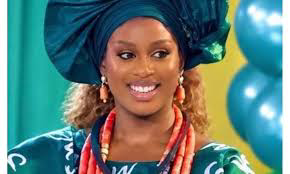
From the beginning, she was difficult to ignore.
She was outspoken. Energetic. Dramatic when she wanted to be. Occasionally controversial. And her British accent became one of the earliest talking points around her.
Some viewers found the accent refreshing; others questioned it or mocked it. One online commenter defended her, arguing that she was simply speaking with the accent she grew up with.
But beneath the accent debate was something more important: Temi understood that Big Brother is not simply about being liked. It is about being remembered.
And Temi was remembered.
The official BBNaija material repeatedly presented her as bold, outspoken and impossible to ignore, while an independent Ranks Africa social-conversation ranking placed her first in its Week 1 and Week 2 tracking.
Her journey included the now-famous custard episode, the BB Bucks controversy, her kiss with Tram, the fake eviction and a succession of moments that kept her name in the conversation.
When the final votes were counted, she secured 25.87 per cent, narrowly beating Aikou’s 23.68 per cent. Sheba finished third with 9.80 per cent.
The margin between Temi and Aikou was just 2.19 percentage points.
So, did Temi deserve it?
By the rules, absolutely. By public sentiment, it is more complicated.
AIKOU: THE WINNER MANY THOUGHT COULD HAVE BEEN
If Temi represented energy, visibility and unpredictability, Aikou represented something different: composure, intelligence and what some viewers regarded as authenticity.

The 25-year-old backend developer and teacher gradually built a following without appearing to aggressively manufacture a television persona.
One fan on Nairaland captured that sentiment:
“Nobody sold him to us…NOTHING! … This is what organic fanship is like.”
Another simply declared:
“Aikou is my winner. I roll with intelligent people and am attracted to intelligence.”
And after his victory slipped away, another fan wrote:
“Aikou has been cheated.”
That is important.
Because Aikou was not merely a runner-up. He came within 2.19 points of taking the crown.
At one stage, he was even selected by the public as one of the season’s Gambits, and later received crucial protection from Barry through the Ultimate Veto Power. He eventually became one of the strongest challengers to Temi.
If Temi was the louder drum, Aikou was the deeper bass.
Different audiences heard different things.
And perhaps that explains the final result better than the argument over who was “deserving.”
SHEBA: THE OTHER STORY THAT NEVER FULLY EXPLODED
Sheba finished third with 9.80 per cent of the final vote.
She was not insignificant. Far from it.
She had enough personality and visibility to survive the long journey and reach the final three, but the voting figures show a substantial gap between her and the two leading contenders.

Temi and Aikou together accounted for 49.55 per cent of the final vote, while the other finalists shared the remaining 50.45 per cent.
In other words, the final battle had effectively become a two-horse race.
And that is where the “PR won over popularity” argument becomes interesting.
DID PR WIN OVER POPULARITY?
Some fans have suggested that this year’s result felt like PR defeating raw popularity.
That claim should be handled carefully.
There is no credible evidence proving that paid public relations machinery determined the result. Temi won through the show’s voting system, and the final result was independently verified.
But there is a broader truth behind the argument.
Modern reality television is no longer simply about what happens inside the house.
It is about what happens around the house.
The clips.
The memes.
The fan accounts.
The influencers.
The blogs.
The TikTok edits.
The X arguments.
The WhatsApp conversations.
The Instagram pages.
The narratives created around a housemate.
In that environment, a contestant who generates conversation can sometimes become more powerful than one who merely performs well inside the house.
Temi understood visibility.
Aikou built affection.
Both are valuable.
But in an attention economy, visibility is currency.
AND THEN CAME THE STRANGE PART: THE SILENCE
Perhaps the most intriguing thing about Season 11 was not what happened inside Biggie’s house.
It was what seemed to be happening outside it.
On Nairaland, one lengthy discussion from the 2025 season captured the growing feeling that the national obsession had weakened. A commenter recalled the Pepper Dem and Lockdown years, when names such as Mercy, Tacha, Erica, Ozo and Laycon seemed impossible to escape, and complained that some colleagues were no longer even aware the show had started. The same commenter argued that the show’s “novelty and nationwide buzz” had diminished.
Another comment during Season 11 simply read:
“Mumu season. Make league football resume back abeg.”
That may sound like ordinary internet banter.
But sometimes jokes are cultural thermometers.
There were also fans who insisted the season was entertaining and that the supposed decline was exaggerated. One participant challenged the idea that the house had been boring, listing several fights, parties, romances and controversies from a single week.
And therein lies the contradiction.
BBNaija still has passionate fans.
But does it still have the same cultural dominance?
Those are not necessarily the same thing.
THE NUMBERS: IS BBNAIJA ACTUALLY LOSING AUDIENCE?
This is where caution is necessary.
There is no publicly available, apples-to-apples official audience figure showing that Season 11 attracted fewer television viewers than Season 10, Season 9 or Season 8.
In fact, MultiChoice’s corporate reporting has continued to describe BBNaija as a strong audience driver. Its FY2025 report said the show continued to attract strong viewership in its ninth season.
So declaring, “BBNaija’s ratings have collapsed,” would go beyond the evidence.
But there are several warning signs.
The first is the voting pattern.
In Season 10, Imisi won with 42.84 per cent of the final vote. Dede received 15.94 per cent and Koyin 15.23 per cent.
In Season 11, Temi won with 25.87 per cent, while Aikou had 23.68 per cent.
Those percentages cannot be used as a direct measure of audience size because the number of finalists and voting structures differed. But they do show something interesting: Season 11 produced a far more fragmented final vote.
The second warning sign is the wider television environment.
MultiChoice’s Nigerian operation lost about 1.4 million subscribers over two years, with the company citing high inflation, power shortages, fuel scarcity and pressure on consumer spending among the factors affecting its Nigerian business.
That matters because BBNaija historically benefited from the power of appointment television and pay-TV.
If fewer households are willing or able to maintain pay-TV subscriptions, the ecosystem supporting a television phenomenon becomes weaker.
THE BIGGEST COMPETITOR MAY NOT BE ANOTHER TV SHOW
It may be the phone in your hand.
Nigeria had about 109 million internet users at the end of 2025, according to DataReportal.
There were also about 47.8 million social-media user identities.
Most strikingly, TikTok’s advertising data indicated a potential reach of 47.8 million Nigerians aged 18 and above by late 2025 ,up by 14.5 million, or 43.4 per cent, from the end of 2024.
That is not merely a technological shift.
It is a cultural shift.
A young Nigerian no longer needs to sit down at 8pm to be entertained.
Entertainment is now walking around with them.
TikTok.
YouTube.
Instagram.
Facebook.
X.
Snapchat.
Twitch.
Podcasts.
Gaming streams.
YouTube Live.
Short-form comedy.
Football content.
Music reactions.
Influencer livestreams.
Online businesses.
And increasingly, content creation itself has become a source of income.
A young person watching a TikTok creator receive gifts during a live session is not simply consuming entertainment.
They are also watching somebody potentially make money in real time.
That changes the psychology of entertainment.
The viewer is no longer asking only:
“What can entertain me?”
The viewer is increasingly asking:
“What can entertain me, teach me, connect me, or even help me make money?”
THE NEW NIGERIAN DREAM: DON’T JUST WATCH THE SHOW , BECOME THE SHOW
This may be the biggest challenge BBNaija faces.
For years, the show offered an extraordinary proposition:
Enter Biggie’s house, become famous and change your life.
But social media has democratised that proposition.
Today, a teenager with a smartphone can build an audience without passing a Big Brother audition.
A comedian can become famous from a bedroom.
A fashion creator can build a brand from Instagram.
A gamer can stream on Twitch.
A storyteller can build a YouTube audience.
A TikTok creator can turn influence into brand deals, live gifts, affiliate marketing and business opportunities.
Research published in 2026 on Nigerian TikTok influencers found that creators increasingly depend on brand partnerships, sponsored promotions, referrals and cross-platform visibility to make money, even though direct TikTok monetisation remains limited in Nigeria.
That distinction is crucial.
BBNaija once controlled the gateway to fame.
Social media has blown the gate open.
BUT LET US NOT BLAME EVERYTHING ON TIKTOK
There are other forces at work.
1. Economic hardship
Nigeria’s economic reality has changed dramatically.
The National Bureau of Statistics reported headline inflation of 15.39 per cent in August 2026, with food inflation at 19.57 per cent. Prices are still rising even though the inflation rate has moderated significantly from the previous year.
For millions of Nigerians, entertainment competes with food, transport, rent, electricity, school fees and data.
A person who once spent hours following every eviction may now be working a second job.
Someone who once paid for television may now be prioritising mobile data.
And somebody who once bought votes may now be asking a more basic question:
“What do I gain from spending money to vote for somebody on television?”
2. Subscription pressure
This is not theoretical.
MultiChoice’s subscriber decline shows that the pay-TV business itself is under pressure.
And when the gatekeeper’s business model is under pressure, even a flagship show cannot exist in isolation.
3. Show fatigue
Eleven seasons is a long relationship.
The formula is familiar.
Housemates enter.
They fight.
They fall in love.
They nominate.
They win tasks.
They receive punishments.
They get evicted.
Ebuka asks uncomfortable questions.
A winner emerges.
Sponsors activate.
The reunion follows.
Then another season begins.
The first time Nigerians saw the experiment, it felt revolutionary.
After years of repetition, viewers know the machinery.
And when the audience can predict the machinery, surprise becomes harder to manufacture.
4. The All-Stars problem
The 2023 All-Stars season was supposed to be a celebration of the franchise’s history.
Instead, it also exposed one of the show’s biggest vulnerabilities.
Once former stars return, the new housemates can struggle to create their own mythology.
Why watch someone become famous when you can watch someone who is already famous?
The franchise risked becoming nostalgic about itself.
And entertainment built too heavily around nostalgia can become a museum rather than a movement.
HAS BIG BROTHER SLOWED DOWN ON PUBLICITY?
Not really , at least not based on the evidence.
Season 11 still had a substantial commercial machine behind it.
BetPawa came in as headline sponsor. Guinness returned as Gold Sponsor. Minimie joined as Associate Sponsor, while a wider group of brands participated in the season. Industry reports counted roughly 25 commercial partners around the season.
There were launch activations, sponsored tasks, brand campaigns, digital content and watch-party activities.
The problem may therefore not be lack of publicity.
It may be publicity saturation.
When every brand is trying to hijack the same conversation, the conversation itself becomes crowded.
BBNaija may still be everywhere.
But being everywhere is not the same thing as being unavoidable.
THE ₦160 MILLION QUESTION
Then there is the money.
Season 11 was announced with a record ₦160 million grand prize, including ₦100 million in cash and an SUV.

After ₦10 million was moved into the Most Influential Player of the Week prize pot, Temi’s final cash component was reported as ₦90 million, alongside the SUV and other sponsored rewards.
On paper, ₦160 million sounds enormous.
And it is.
But the naira has changed.
The prize was ₦25 million in Season 2, ₦45 million in Season 3, ₦60 million in Season 4, ₦85 million in Season 5, ₦90 million in Season 6, ₦100 million in Season 7 and ₦120 million in Season 8. Season 10 rose to ₦150 million, before Season 11 reached ₦160 million.
The problem is that nominal growth is not the same as real wealth.
Consider the cash component.
In 2020, the national minimum wage was ₦30,000.
An ₦85 million Season 5 prize therefore represented about 2,833 months of the statutory minimum wage more than 236 years.
In 2026, ₦90 million represents about 1,286 months of the ₦70,000 minimum wage roughly 107 years.
The winner is still receiving an enormous sum.
But measured against the statutory wage floor, the cash prize’s relative purchasing power has fallen dramatically.
The national minimum wage was increased from ₦30,000 to ₦70,000 in 2024.
And the naira itself has weakened enormously. The CBN recorded an interbank rate of around ₦381/$ in late 2020, compared with an NFEM rate of about ₦1,329/$ in September 2026.
So there is an irony here:
BBNaija’s prize is bigger than ever in naira, but the naira itself is worth far less.
Perhaps it is time for the organisers to rethink what “life-changing” means.
Should the prize remain a large cash cheque?
Should it include a guaranteed investment fund?
A house?
Business capital?
Education?
A structured talent-development deal?
A five-year management contract?
A production budget?
Because giving a young person ₦90 million is one thing.
Giving that person the tools to turn ₦90 million into a ₦500 million career is something else entirely.
THE SHOW MAY NEED TO CHANGE — NOT JUST GET LOUDER
If BBNaija wants to remain culturally dominant for another decade, bigger prizes alone may not be enough.
The organisers need to ask difficult questions.
Are the housemates still sufficiently diverse in personality, class, profession and worldview?
Are they looking for authentic characters or people who already understand reality-TV formulas?
Has the audition process become too predictable?
Does the show need more intellectual challenges?
Should viewers have greater influence over the game itself?
Should there be more interaction between the house and the outside world?
Can the show become genuinely cross-platform rather than television-first?
And perhaps the most important:
What can BBNaija offer that TikTok, YouTube, Twitch and Instagram cannot?
That is the battle.
Not between Temi and Aikou.
Not between this season and last season.
But between traditional appointment television and an internet generation that has learned to create its own entertainment.
BBNAIJA STILL HAS SOMETHING MOST SHOWS DON’T
It would nevertheless be premature to write Big Brother Naija’s obituary.
The franchise remains commercially powerful.
It still attracts major sponsors.
It still produces celebrities.
Its official YouTube ecosystem continues to attract substantial audiences; third-party tracking showed the BBNaija YouTube channel above 800,000 subscribers in 2026 and accumulating millions of views.
The official platform also continued to publish clips, live updates, shorts and housemate content throughout Season 11.
And perhaps most importantly, people are still arguing about it.
A dead cultural product does not produce heated arguments about whether Aikou was robbed.
It does not generate debates over Temi’s accent.
It does not create rival fan camps.
It does not attract dozens of sponsors.
It does not produce millions of digital interactions.
So perhaps BBNaija is not dying.
Perhaps it is ageing.
And ageing is different.
THE REAL DANGER IS NOT DEATH — IT IS IRRELEVANCE
That may be the distinction the organisers need to understand.
A programme can still be profitable while losing cultural relevance.
It can still have sponsors while losing young viewers.
It can still trend while becoming less important.
It can still have millions of viewers while no longer commanding the national conversation it once did.
And that is the warning hidden inside those seemingly insignificant comments:
“When did the show start?”
“I didn’t even pay attention.”
Those statements are more frightening to a broadcaster than someone saying, “I hate BBNaija.”
Hatred is engagement.
Indifference is not.
SO, IS BBNAIJA LOSING ITS RELEVANCE?
The evidence does not yet justify saying that BBNaija is in a measurable ratings collapse.
But there are enough signs to justify asking whether its cultural dominance is weakening.
There is stronger competition for attention.
There is pressure on pay-TV subscriptions.
There is economic hardship.
There is show fatigue.
There is a generation of young Nigerians who no longer need television to become celebrities.
There is a creator economy where ordinary people can build audiences and monetise them without waiting for Biggie to open the door.
And there is an increasingly sophisticated Nigerian audience that may simply be demanding something new.
BBNaija’s greatest achievement was turning ordinary Nigerians into stars.
Its greatest challenge now may be that social media has taught ordinary Nigerians how to become stars without BBNaija.
That changes everything.
Temi Nkem has won the crown.
She earned it.
Aikou came remarkably close.
Sheba completed the final three.
But beyond the confetti, the bigger contest has already begun.
It is a contest for attention.
For relevance.
For culture.
For the imagination of young Nigerians.
And Biggie is no longer competing only against other television programmes.
He is competing against every smartphone in Nigeria.
The old proverb says, “A river that forgets its source will dry up.”
For BBNaija, the danger may be the opposite.
It knows its source.
It knows its formula.
It knows its sponsors.
It knows its audience.
But does it know where the audience is going?
Because Big Brother may still be watching.
The more important question now is:
Is Nigeria still watching Big Brother or has Big Brother finally become just another thing Nigeria watches?
About The Author