
Spain Train Collision Kills 64, Injures Over 100 as Death Toll Feared to Rise
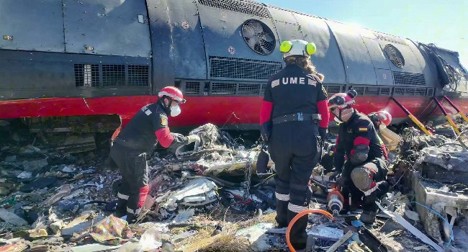
A devastating high-speed train collision in Spain has killed at least 64 people and injured more than 100 others, with authorities warning that the death toll could rise as rescue operations continue.
The crash occurred on Wednesday, October 28, in the Castilla-La Mancha region, about 150 kilometres south of Madrid, involving a state-operated Renfe AVE train and a service operated by private railway company Iryo.
The impact left several carriages overturned and twisted metal scattered down an embankment, as emergency responders raced against time to search for survivors.
“We are speaking of approximately 64 dead, but this is probably going to grow even more,” Castilla-La Mancha regional leader Emiliano García-Page told reporters at the scene, confirming a sharp increase from the earlier toll of 31.
More than 100 people were injured, with 58 taken to hospital and 15 reportedly in critical condition.
Helicopters hovered over the crash site as rescue teams combed through the wreckage. Emergency vehicles flooded the area, while funeral service vans arrived amid the desperate search for victims.
Read also OPC Arrests 3 Suspected Kidnappers at Old Oyo National Park, Recovers Rifles
LULA’S HISTORIC COMEBACK: HOW BRAZIL’S POLITICAL SURVIVOR WON A FOURTH PRESIDENTIAL TERM
‘Horrific Scene’ as Survivors Describe Collision
A resident, 49-year-old Manuel Ortiz, said he had spent the morning transporting survivors in his car from the crash site.
According to Ortiz, passengers aboard the Iryo train told him their train was stationary when the collision occurred.
He described the scene as “horrific, horrible”, adding that the area smelled of metal following the impact.
Renfe confirmed that the high-speed rail line connecting Madrid to southern Spain had been suspended following the collision.
Iryo said its train was carrying 147 passengers and five staff members, including the driver, when it was struck from behind by the Renfe service.
The cause of the crash remains unknown. Investigators were seen examining the tracks and taking photographs as authorities began efforts to establish what went wrong.
Advertisement

Spain’s Rail Safety Under Fresh Scrutiny
The latest tragedy has reignited concerns about railway safety in Spain, coming just months after another deadly collision shook the country.
In January, a crash involving two high-speed trains near Adamuz, in southern Spain, killed 46 people, raising serious questions about the safety of the country’s railway network.
The January disaster was Spain’s deadliest train accident since 2013, when 80 people died after a train derailed near Santiago de Compostela.
Both deadly incidents this year occurred on the railway corridor linking Madrid to Seville.
Despite massive investments in its high-speed rail infrastructure, Spain now faces renewed pressure to explain how another major collision could occur.
The latest crash happened on a straight stretch of track under sunny, dry conditions, with no immediate explanation for the circumstances surrounding the impact.

Sánchez Heads to Crash Site as Europe Mourns
Spanish Prime Minister Pedro Sánchez expressed shock over the disaster and said he was heading to the scene.
In a message posted on X, Sánchez sent his condolences and pledged solidarity and support to the victims and their families.
The Spanish royal household also expressed concern, while the European Union offered assistance if required.
European Commission President Ursula von der Leyen said Europe mourned with Spain following the devastating news.
Meanwhile, the Spanish Football Federation postponed 24 matches in the opening round of the Copa del Rey as a mark of respect for the victims.
Major Rail Route Disrupted
The collision has disrupted one of Spain’s busiest railway corridors, with services between Madrid and southern parts of the country suspended.
Spain operates the world’s second-largest high-speed rail network after China, with the system regarded as a major achievement in the country’s transport infrastructure.
The Madrid-Seville high-speed line was Spain’s first of its kind when it opened in 1992 to coincide with the Seville Universal Exposition.
As rescue workers continue searching the wreckage and investigators examine the scene, the country faces another painful reckoning over railway safety.
With at least 64 lives lost and more than 100 people injured, Spain’s latest rail disaster has once again raised urgent questions about the safety of its high-speed train network.
About The Author