
LULA’S HISTORIC COMEBACK: HOW BRAZIL’S POLITICAL SURVIVOR WON A FOURTH PRESIDENTIAL TERM
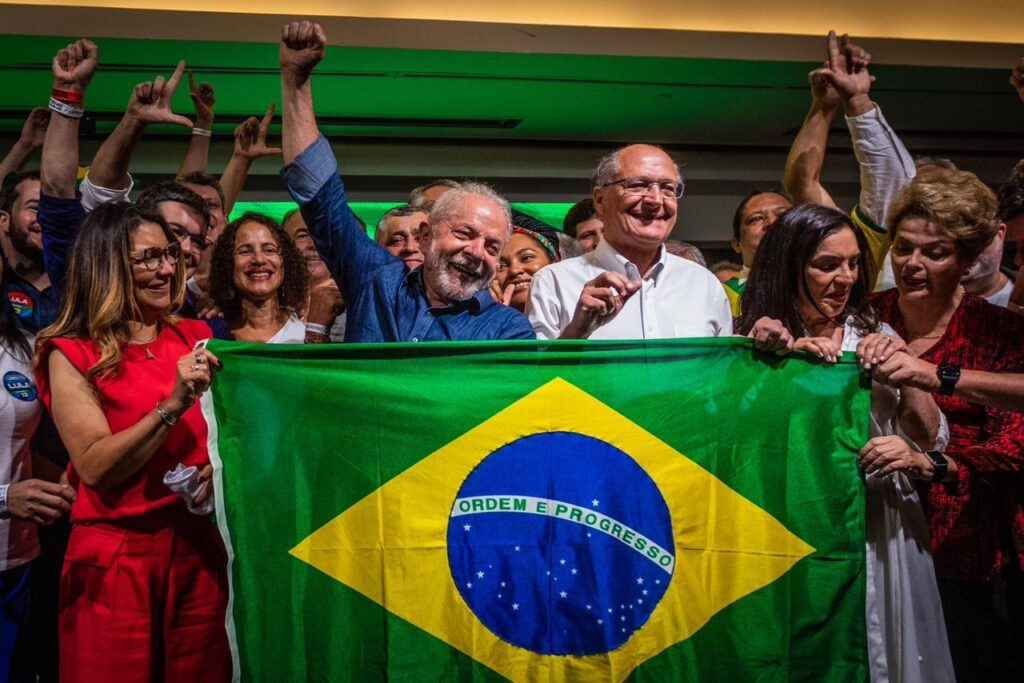


From a poor boy who once shined shoes to a union leader, president, prisoner, and political comeback king, Luiz Inácio Lula da Silva has once again rewritten Brazil’s political history. But his latest victory has come amid fierce rivalry, a deeply divided electorate and fresh disputes over the integrity of the election.
Brazil has delivered another dramatic chapter in one of the most extraordinary political careers of the modern era.
On Sunday, October 25, 2026, President Luiz Inácio Lula da Silva defeated conservative challenger Flávio Bolsonaro in a fiercely contested presidential runoff, securing a historic fourth presidential term across his non-consecutive periods in office.
The final result, reported by Reuters, gave Lula approximately 51.75 per cent of the vote against Flávio Bolsonaro’s 48.25 per cent. The margin was more than four million votes, but the result also revealed just how deeply divided Latin America’s largest democracy remains.
Lula’s victory was particularly remarkable because he had finished behind his opponent in the first round. He needed to reverse that position in the runoff, persuade undecided voters to back him, mobilise supporters who had stayed away from the polls and overcome years of political controversy surrounding him and his Workers’ Party.
He did all of that in an election that was about far more than the personalities of two candidates. It was a contest over Brazil’s economic direction, social welfare, crime, political accountability, democratic institutions, and the future of the powerful Bolsonaro political movement.
But who exactly is Lula da Silva? How did he rise from poverty to become one of the most influential politicians in Latin America? Who is Jair Bolsonaro, the former president whose political legacy dominated this election even though he was not on the ballot? And how did Lula stage another comeback against the Bolsonaro family?
Here is the full story.
FROM POVERTY TO THE PRESIDENCY: THE LULA STORY


Born Luiz Inácio da Silva on October 27, 1945, in the poor northeastern Brazilian state of Pernambuco, Lula grew up in a family that experienced severe financial hardship. His family later moved to the industrial southeast of Brazil in search of better opportunities.
As a child, he worked to help support his family, including selling goods on the streets and shining shoes. He later trained as a metalworker and became involved in the labour movement.
His experiences shaped his political identity. He became a powerful advocate for industrial workers, better wages and improved working conditions at a time when Brazil was still under military rule.
During the late 1970s and early 1980s, Lula emerged as a prominent trade union leader, helping organise major strikes that challenged the military government.
He subsequently helped establish the Workers’ Party, known in Portuguese as the Partido dos Trabalhadores, or PT, in 1980. The party brought together trade unionists, left-wing activists, intellectuals and community organisers who wanted a more democratic and socially inclusive Brazil.
His rise was not immediate.
Lula lost presidential elections in 1989, 1994 and 1998 before finally winning the presidency in 2002.
That victory marked the culmination of years of campaigning and political organising. For many Brazilians, his election represented the arrival of a working-class leader who understood the struggles of ordinary people.
He was inaugurated in January 2003.
What made his first presidency significant?
During his first two terms, from 2003 to 2010, Lula combined economic growth with major social programmes.
His administration expanded Bolsa Família, a cash-transfer programme supporting low-income families, and pursued policies aimed at reducing poverty, hunger and inequality.
Brazil also benefited from strong global demand for its agricultural and mineral exports during much of that period.
Millions of Brazilians experienced improvements in living standards, while the country gained greater international prominence under Lula’s leadership.
His government was not without controversy. Major corruption scandals, including the Mensalão political bribery scandal, damaged the Workers’ Party’s reputation and became a lasting source of criticism.
Nevertheless, Lula left office after two consecutive terms with substantial popular support. Under Brazil’s constitutional rules, he could not immediately serve a third consecutive term, and his political ally Dilma Rousseff succeeded him in 2011.
Few could have predicted the political and legal turmoil that would follow.
THE FALL: HOW LULA WENT FROM PRESIDENT TO PRISONER


The sprawling Operation Car Wash investigation exposed corruption involving politicians, business executives, and the state-controlled oil company Petrobras. Lula was convicted of corruption and money laundering in cases linked to the investigations.
In 2018, he was imprisoned, dealing a major blow to his political ambitions. His conviction also prevented him from contesting that year’s presidential election, which Jair Bolsonaro eventually won.
However, Lula’s legal fortunes changed in 2021 when Brazil’s Supreme Court annulled his convictions on procedural grounds, including a ruling that the court which convicted him lacked jurisdiction. The court also ruled that the judge responsible for his principal case had acted with bias.
The annulment restored his political rights, although it was not a judicial finding that every allegation against him had been disproved. The distinction remains important because Lula’s opponents continue to invoke the corruption scandals, while his supporters point to the legal rulings as evidence that his prosecution was seriously flawed.
Lula returned to the political arena with an opportunity to challenge Bolsonaro directly.
In the 2022 election, he defeated the incumbent president by approximately 50.9 per cent to 49.1 per cent in the runoff.
That victory brought him back to the presidency in January 2023 for a third term.
His political journey had come full circle: from working-class activist to president, from prisoner to presidential candidate, and from political exile to the country’s highest office.
But his rivalry with the Bolsonaro family was far from over.
WHO IS JAIR BOLSONARO, AND WHY DOES HE MATTER SO MUCH?


Bolsonaro is a former Brazilian army captain who entered politics after leaving military service. He served for decades as a congressman before winning the presidency in 2018.
He rose to prominence by presenting himself as an alternative to Brazil’s established political class. His campaign attracted voters frustrated by corruption scandals, insecurity, economic difficulties, and dissatisfaction with the Workers’ Party.
Ideologically, Bolsonaro is associated with the Brazilian right and a hard-line conservative political movement. His politics have emphasised national sovereignty, traditional social values, tougher approaches to crime and close ties with conservative constituencies, including evangelical Christians.
He also expressed admiration for Brazil’s former military regime and repeatedly challenged the credibility of the country’s electronic voting system, despite lacking evidence to substantiate his broader allegations of electoral fraud.
Why did Bolsonaro become Lula’s biggest rival?
Bolsonaro and Lula represent sharply different political traditions.
Lula’s political identity is rooted in organised labour, social welfare, poverty reduction and a more active role for the state in addressing inequality.
Bolsonaro’s movement draws support from conservative voters, sections of the business community, religious constituencies and people who want tougher security policies or oppose the Workers’ Party.
Their disagreement extends beyond policy. Each has become a symbol around which millions of Brazilians organise their political identities.
For Lula’s supporters, Bolsonaro represents a threat to democratic institutions and social protections. For Bolsonaro’s supporters, Lula and the Workers’ Party represent a political establishment associated with corruption, government spending and policies they believe have failed to address everyday economic problems.
These are competing political interpretations, not descriptions that every supporter on either side necessarily accepts.
What happened after Bolsonaro lost in 2022?
Bolsonaro’s refusal to accept the 2022 result was followed by a major democratic crisis.
On January 8, 2023, a week after Lula’s inauguration, Bolsonaro supporters stormed and vandalised Brazil’s Congress, Supreme Court and presidential palace in Brasília. Brazilian authorities investigated the events and the wider efforts to overturn the election.
Bolsonaro was subsequently convicted over a plot to overturn the 2022 election and sentenced to 27 years in prison. He has also faced restrictions on his political activities.
His legal troubles have not erased his political influence.
Instead, the Bolsonaro name has remained a rallying point for a powerful conservative movement, which brings us to the central figure in the 2026 election: his son, Flávio Bolsonaro.
WHY WAS FLÁVIO BOLSONARO THE CANDIDATE IN 2026?

A crucial distinction: Lula did not defeat Jair Bolsonaro in the 2026 election. He defeated Jair Bolsonaro’s son, Flávio Bolsonaro.
Flávio is a senator and a member of the Bolsonaro political family. He emerged as the conservative candidate seeking to carry his father’s political movement back into the presidency.
His campaign sought to mobilise voters who opposed Lula and wanted a change in the country’s direction. He also promised to pursue an amnesty for his father, making Jair Bolsonaro’s legal fate a significant issue in the campaign.
Flávio’s candidacy transformed the election into something resembling a rematch of 2022, but with a generational twist.
Lula was fighting to preserve his administration and extend his political legacy. Flávio was attempting to inherit his father’s movement and restore the Bolsonaro family to the presidential palace.
The election therefore tested whether the Bolsonaro movement could survive the legal downfall of its most prominent figure by transferring its political appeal to another member of the family.
For much of the campaign, the answer appeared uncertain.
THE 2026 ELECTION: HOW LULA TURNED DEFEAT INTO VICTORY


The first round: Flávio takes the lead
In Brazil’s first-round presidential election, held earlier in October, Flávio Bolsonaro finished ahead of Lula.
Flávio received approximately 47.03 per cent of the valid vote, while Lula secured about 45.16 per cent.
Neither candidate crossed the 50 per cent threshold required to win outright, forcing the election into a runoff on October 25.
The first-round result was a warning to Lula. After nearly four years back in office, he was facing voter frustration over the cost of living, concerns about crime and continuing resentment over corruption scandals associated with his party.
Flávio, meanwhile, had successfully mobilised conservative voters and presented himself as the candidate of political change.
The runoff: Lula finds a way back
The second round became a battle for undecided voters and for millions who had not voted in the first round.
Lula leaned on his record of social programmes and improvements in living standards, while promising additional measures to help households facing financial pressure.
His campaign highlighted poverty reduction, employment, social welfare and environmental protection. Late-campaign proposals included an increase in Bolsa Família benefits, a new debt-renegotiation initiative and free public transport on weekends.
Flávio’s campaign focused on dissatisfaction with Lula’s government, the cost of living, taxation, crime and opposition to the Workers’ Party.
The competing messages reflected two different assessments of Brazil’s problems: whether the country needed to continue Lula’s social and economic approach or change direction under a conservative administration.
Lula’s campaign also benefited from stronger-than-expected turnout in the runoff. Supporters who feared a Bolsonaro return mobilised, while voters who had been undecided or absent in the first round helped change the balance.
The final result
Brazil presidential runoff · October 25, 2026
Workers’ Party (PT)
51.8%

Flávio Bolsonaro
Liberal Party (PL)
48.2%
Winning margin
About 4.4 million votes
Rounded percentages reported by the Superior Electoral Court and international news organisations.
The result made Lula the first candidate in Brazil’s modern direct presidential election era to win a runoff after finishing second in the first round, according to reporting by Folha de S.Paulo.
It also secured him a fourth, non-consecutive presidential term, following his two terms from 2003 to 2010 and his return to office in 2023.
The comeback was historic. But the election was not without controversy.
THE ELECTION DISPUTE: WHY FLÁVIO BOLSONARO WANTS THE RESULT ANNULLED

One of the most contentious moments came as polling stations were preparing to close on election day.
A Brazilian Supreme Court justice, Cristiano Zanin, ordered voting hours to be extended nationwide by two hours after reports of problems affecting public transport for voters in several states.
The decision followed complaints that transport difficulties could prevent people from reaching polling stations. Lula’s camp raised concerns about obstacles to voter transport in areas including parts of Bahia and São Paulo. Flávio’s campaign had also sought an extension in some locations because of heavy rain in southern Brazil.
However, the nationwide extension, announced just minutes before the scheduled closing time, created confusion at some polling stations. In certain locations, the decision reportedly reached officials only after polling had already ended.
Why did Flávio challenge the election?
After the result was announced, Flávio refused to concede defeat.
He questioned the decision to extend voting hours and announced plans to seek the annulment of the election, arguing that the circumstances surrounding the extension undermined confidence in the result.
His objection centred on the timing and legality of the decision, the potential effect on voting and the role of a Supreme Court justice appointed during Lula’s political tenure who had previously served as Lula’s lawyer.
These circumstances fuelled questions among Bolsonaro supporters about judicial independence and whether the electoral process had been handled impartially.
But there is an important distinction between questioning a decision and proving that an election result is invalid.
Will the election be annulled?
Reuters reported on October 26 that analysts considered annulment unlikely, particularly given Lula’s margin of more than four million votes. Flávio’s own campaign had also sought voting extensions in parts of the country, complicating its argument against the measure itself.
As of October 26, the challenge was an announced intention to seek annulment; it should not be confused with a court ruling overturning the result.
The dispute nevertheless raises significant questions about the relationship between the judiciary and the political branches of government, the management of elections and the need for electoral authorities to explain decisions transparently.
For Brazil, the immediate challenge is to ensure that legal disputes are resolved through established institutions rather than through intimidation or political violence.
THE ATMOSPHERE IN BRAZIL: CELEBRATIONS, ANXIETY AND POLITICAL DIVISION


The atmosphere following the result reflected the divisions that had defined the campaign.
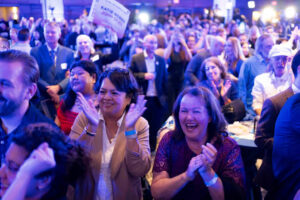
In São Paulo, thousands of Lula supporters gathered along the iconic Paulista Avenue. Fireworks, dancing, singing and chants of “Lula, Lula” filled the streets as people celebrated his victory.
Similar scenes were reported in Rio de Janeiro and other Brazilian cities. Some supporters embraced and cried, seeing the result as a defence of the social programmes they associate with Lula and a rejection of the Bolsonaro family’s attempt to return to power.
For Lula’s supporters, the victory represented another extraordinary political survival story: a man who had been imprisoned over corruption convictions that were later annulled had returned to the presidency and won another election.
But the celebrations were only one side of the picture.
Many Bolsonaro supporters remained angry about the result and the voting extension. Others had voted for Flávio because of concerns about high living costs, taxes, crime and the Workers’ Party’s record.
The refusal to concede and the prospect of legal challenges added uncertainty to an already polarised political environment.
The country was therefore experiencing two contrasting moods: celebration among Lula’s supporters and frustration, suspicion or disappointment among sections of the opposition.
It would be inaccurate to suggest that every Brazilian was celebrating or that the entire opposition rejected the result. The public response was diverse, and some political opponents publicly acknowledged Lula’s victory.
The central reality was that the election had produced a president with a national mandate, but not a country united behind him.
HOW WORLD LEADERS REACTED TO LULA’S VICTORY

Lula’s victory attracted international attention because Brazil is Latin America’s largest economy and an influential member of the BRICS grouping of major emerging economies.
World leaders responded with congratulations, messages of cooperation and recognition of the electoral result.
According to Reuters’ October 26 report:
-
Canada: Prime Minister Mark Carney highlighted opportunities to strengthen relations with Brazil through trade, environmental protection and shared prosperity.
-
Mexico: President Claudia Sheinbaum celebrated the result as a democratic achievement.
-
Uruguay: President Yamandú Orsi congratulated Lula and praised the electoral process.
-
Chile: President José Antonio Kast emphasised economic integration and cooperation against organised crime.
-
Paraguay: President Santiago Peña stressed regional integration and development.
-
Cuba: President Miguel Díaz-Canel described the victory as historic and reaffirmed support for Brazil’s pursuit of peace, sovereignty and social justice.
- Panama: President José Raúl Mulino congratulated Lula and the Brazilian people, expressing a desire for continued cooperation.
What about Donald Trump and the United States?
The election also carries implications for relations between Brasília and Washington.
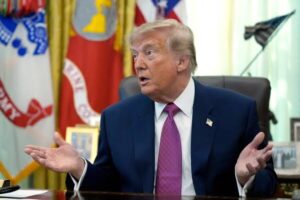
US President Donald Trump had pursued a policy of strengthening conservative influence in Latin America, while his administration’s tariffs against Brazil, linked in part to the prosecution of Jair Bolsonaro, became an issue in Lula’s campaign.
Lula presented Brazilian sovereignty and an independent foreign policy as important themes. His victory means that Brazil is set to continue pursuing its own approach to relations with Washington, China and other international partners rather than moving automatically towards the political alignment sought by the Bolsonaro camp.
However, the election does not mean cooperation between Brazil and the United States must end. Both countries have important economic and diplomatic interests, and the relationship will depend on decisions made by their governments.
For Lula, international congratulations are significant, but the real test will be translating diplomatic goodwill into economic opportunities and practical cooperation.
WHY LULA’S FOURTH TERM COULD BE HIS MOST DIFFICULT
Winning an election and governing effectively are two different challenges.
Lula enters his fourth term with a divided electorate and a legislature that has shifted strongly towards conservative parties and Bolsonaro allies.
Reuters has reported that the new Congress could make it difficult for Lula to pass legislation, manage spending priorities, and secure support for his appointments and policy agenda.
Several challenges stand out.
The cost of living: Voters will expect the government to make everyday life more affordable. Food, household debt, interest rates and the cost of essential services will remain important tests of public confidence.
Crime and public security: Concerns about violence and organised crime helped shape the campaign. Lula will need to show that his government can improve security while respecting the law and constitutional rights.
The economy and public finances: The administration will have to balance social spending and investment against concerns over public debt, interest costs and economic growth.
Political reconciliation: With nearly half of valid runoff votes going to Flávio Bolsonaro, Lula cannot assume that electoral victory has resolved the country’s divisions.
The Bolsonaro movement: Even after losing the presidency, conservative parties and politicians retain considerable political influence. The movement’s future leadership and Jair Bolsonaro’s legal situation will continue to affect Brazilian politics.
Lula has also promised to continue tackling poverty and inequality, protect the Amazon and strengthen Brazil’s international role. Whether those commitments translate into lasting results will be judged over the coming years.
WHAT LULA’S VICTORY MEANS FOR BRAZIL AND THE WORLD


First, it extends the political influence of the Workers’ Party at a time when several Latin American countries have elected conservative governments. His victory interrupts a recent regional pattern of right-wing presidential wins, although the political direction of Latin America remains far from settled.
Second, it preserves the possibility of a more interventionist economic approach, including social welfare programmes, poverty reduction and a prominent role for the state in development. Supporters see these policies as necessary to reduce inequality; critics question their cost and the government’s ability to manage public finances.
Third, it keeps Brazil on a foreign-policy path that emphasises strategic autonomy, multilateral diplomacy and engagement with both Western and non-Western partners.
For Africa, including Nigeria, Brazil’s continued engagement with the Global South may offer opportunities for cooperation in agriculture, food security, energy, trade, education and climate policy. Whether those opportunities materialise will depend on diplomatic initiatives and concrete agreements rather than the election result alone.
THE FINAL WORD: A POLITICAL COMEBACK, BUT NOT THE END OF THE BATTLE
Lula da Silva’s fourth presidential victory is another remarkable chapter in a career shaped by poverty, labour activism, electoral defeats, political success, corruption investigations, imprisonment and an extraordinary return to power.
He first won the presidency in 2002. He later lost political ground, went to prison and saw his convictions annulled. In 2022, he defeated Jair Bolsonaro. In 2026, he overcame Jair’s son, Flávio, after trailing in the first round.
Yet this is not simply a story of one man defeating another.
It is the story of a country divided over how to fight poverty, how to grow its economy, how to maintain public security and how to protect democratic institutions. It is also a reminder that electoral victories do not automatically settle disputes over political legitimacy.
Lula has secured another mandate, but he now faces the responsibility of governing a country in which millions voted for his opponent and many remain sceptical of his administration.
Flávio Bolsonaro’s decision to challenge the result adds another test for Brazil’s electoral institutions. The response will matter: disputes must be assessed on evidence and through lawful procedures, not resolved by political pressure.
For Lula, the next chapter will be defined not by the number of times he has returned to power, but by what he achieves with it.
For Brazil, the challenge is larger still: to turn a fiercely contested election into a peaceful transition, protect democratic institutions and deliver improvements that citizens across the political divide can recognise.
Lula has won the election. The harder task of governing a divided Brazil begins now.
About The Author