
Ballon d’Or 2026: Harry Kane, Mbappé or Lamine Yamal? Inside the Battle for Football’s Most Coveted Individual Crown
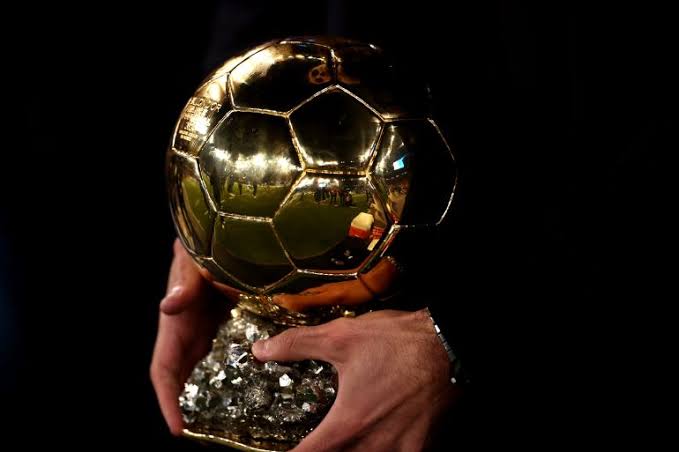


The stage is set in London for the 70th edition of the Ballon d’Or, and the men’s race is shaping up as a fascinating contest between England captain Harry Kane, Real Madrid superstar Kylian Mbappé and Barcelona’s teenage sensation Lamine Yamal.
Kane enters the ceremony as the bookmakers’ favourite. Mbappé has mounted a dramatic late challenge, while Yamal has a compelling case built around his extraordinary individual ability and Spain’s World Cup triumph.
But this is not simply a contest between three exceptional footballers. It is a battle between goals, trophies, international glory, reputation, historical significance and the judgment of a relatively small group of journalists whose decisions can make or break a player’s place in football history.
And with the ceremony taking place in London, Kane has an opportunity to achieve something English football has not witnessed since Michael Owen won the award in 2001.
So, who deserves to win, who is most likely to win, and why does this award generate so much controversy every year?
What makes the Ballon d’Or so important?

Unlike a league title or the UEFA Champions League, the Ballon d’Or is not won by a team. It is a personal recognition of excellence across a season.
That distinction explains its enormous emotional and commercial value.
For a footballer, winning it can:
-
Define a legacy. A Ballon d’Or winner enters an elite historical conversation, alongside legends such as Lionel Messi, Cristiano Ronaldo, Michel Platini and Johan Cruyff.
-
Strengthen commercial appeal. The recognition can enhance a player’s profile with sponsors, advertisers and global audiences.
-
Settle debates. Fans and pundits constantly argue over who is the best player in the world. The award gives one player the official distinction, even if the argument continues.
-
Validate years of sacrifice. Training, injuries, competition, and the pressure to perform can culminate in one unforgettable night.
-
Shape football history. Winning or missing out can become a defining chapter in a player’s career.
Consider Messi. His record eight Ballon d’Or victories have become a central part of the argument for his status as one of football’s greatest players. Cristiano Ronaldo’s five victories similarly form a major part of his legacy.
For today’s stars, the attraction is not merely the trophy. It is the recognition that they have stood above their peers.
But that is precisely where the controversy begins: who decides who stands above everyone else?
Do football fans actually choose the winner?
No. Not directly.
Millions of supporters may debate the winner, campaign for their favourite player and flood social media with statistics. But the men’s and women’s Ballon d’Or are decided by specialist journalists, not by a global public vote.
That means a player can be overwhelmingly popular among supporters and still lose.
How the voting works
Step 1: A shortlist of 30 players
The shortlist is prepared through the award’s editorial selection process, with input from designated football representatives.
Step 2: An international jury votes
For the 2026 men’s award, one specialist journalist represents each of the 100 highest-ranked eligible FIFA nations. The women’s jury draws from the top 50 nations.
Step 3: Each journalist ranks 10 players
The points awarded are 15, 12, 10, 8, 7, 5, 4, 3, 2, and 1, from first to tenth place.
Step 4: Points are added up
The player with the highest total wins. If points are tied, first-place votes are used as the initial tiebreaker, followed by lower-ranking vote counts.
This system has one important consequence: the winner does not necessarily have to be every journalist’s favourite. A player who consistently appears near the top of many ballots can defeat a rival who receives more passionate support from a smaller group of voters.
It is a points-based competition, not a popularity contest.
What exactly are voters supposed to consider?
The criteria are ranked in this order:
-
Individual performances, including decisive contributions and exceptional character.
-
Team performances and trophies won.
-
Class and fair play.
The period under review for the 2026 award runs from August 3, 2025, to July 19, 2026. Therefore, performances after that cutoff are not supposed to determine the result.
The rules sound straightforward. The difficulty is that football does not provide a single objective measure of greatness.
Is 50 goals more valuable than 25 goals and 20 assists? Should a midfielder who controls matches beat a striker who scores decisive goals? Should winning the World Cup outweigh an extraordinary domestic season?
The rules do not provide a mathematical formula for resolving every such argument. Voters must exercise judgment, and that is where different interpretations emerge.
3. Why is the Ballon d’Or surrounded by controversy?
The award has repeatedly divided football because its voting process is objective in calculation but subjective in judgment.
A ballot can be counted correctly and still produce a winner whom millions of people believe is wrong.
Three controversies illustrate the problem.
The 2024 Vinícius Júnior–Rodri battle


Few recent editions generated as much anger as the 2024 award.
Vinícius Júnior was a leading contender after helping Real Madrid win both La Liga and the Champions League. Rodri, meanwhile, was central to Manchester City’s domestic success and Spain’s Euro 2024 triumph.
When Rodri was announced as the winner, Real Madrid boycotted the ceremony after learning that Vinícius would not receive the award. The club’s anger extended to the recognition of other Madrid figures, including coach Carlo Ancelotti.
The controversy escalated when Real Madrid president Florentino Pérez publicly questioned the credibility of some voters, singling out journalists from Namibia, Uganda, Albania and Finland. He argued that the award should be organised independently and voted on by more prominent figures in football.
But the journalists themselves had a different perspective.
Namibian journalist Sheefeni Nikodemus pushed back against Pérez’s criticism, questioning the implication that voters from smaller football nations should be considered less legitimate because their choices differed from Real Madrid’s preference.
This exposed a deeper question: should voting power depend on a journalist’s reputation, the footballing stature of their country, or a standard set of eligibility rules applied equally to all participating nations?
There was also debate about whether the presence of several Real Madrid candidates divided support among them, helping Rodri. France Football’s editor-in-chief discussed this possibility, but that is not evidence that the result was manipulated.
The lesson: a controversial result does not automatically mean a fraudulent result. It does, however, demonstrate how much the award depends on the voters’ interpretation of the season.
The 2021 Lewandowski–Messi debate


Robert Lewandowski’s failure to win the 2021 award remains another major talking point.
The Polish striker had enjoyed a prolific period at Bayern Munich and was widely regarded as a deserving candidate. The 2020 Ballon d’Or had been cancelled during the COVID-19 pandemic, the same year Lewandowski was particularly dominant.
When Messi won in 2021, Lewandowski finished second, losing by just 33 points.
The debate centred on whether Messi’s overall performances and international success with Argentina should outweigh Lewandowski’s extraordinary goalscoring record.
It was a disagreement about how the season should be valued, rather than proof that the ballots had not been counted.
The 2019 Messi–Van Dijk contest
Virgil van Dijk came remarkably close to defeating Messi in 2019. Under the current scoring structure, their difference was only seven points, one of the tightest finishes in the award’s history.
That result demonstrates just how much individual rankings matter. A few changes to journalists’ ballots could have changed the winner.
It also reinforces a central truth about the Ballon d’Or: when several candidates have exceptional seasons, small differences in judgment can have enormous consequences.
Read also FIFA Takes Over NFF Affairs, Sets May 2027 Deadline For New Leadership
Flamingos stun defending champions North Korea 3-1 to storm into World Cup knockout stage
Have voters ever accused the organisers of manipulating the result?
This is one of the most important questions surrounding the award, and it requires a distinction between disputed voting decisions, administrative complaints and proven manipulation.
The 2024 controversy produced serious accusations of bias from Real Madrid’s leadership and commentators in Brazil. But the available reporting does not establish that the organisers deliberately manipulated the final result or that valid votes were systematically discarded.
There is also an important difference between a journalist complaining that their vote did not influence the result and a journalist alleging that their ballot was not counted.
Under the current system, a journalist’s ballot contributes points to the overall tally. A journalist can rank a player first and still watch that player lose because other voters awarded more points to a rival.
The strongest way to assess any allegation of interference would be to establish:
-
Whether a submitted ballot was excluded or altered.
-
Whether the published totals match the valid ballots.
-
Whether the organisers applied the rules consistently.
-
Whether there is documentary evidence supporting an allegation of interference.
Public reporting has documented fierce disagreements over individual votes and the legitimacy of some voters. It has not established a general pattern of organisers conspiring to manufacture winners.
There is, nevertheless, a legitimate transparency question. The selection of the 30 nominees involves an editorial process, while the final result depends on individual ballots. Fans who disagree with the outcome may reasonably want greater visibility into how decisions are made.
The distinction matters: an unpopular winner is not necessarily an illegitimate winner, but an award with this much prestige must be able to withstand scrutiny.

Who are the frontrunners for the 2026 men’s Ballon d’Or?
The race has narrowed to three leading contenders, although other nominees remain on the official shortlist.

1. Harry Kane — The favourite
Bayern Munich and England
Kane’s case rests on extraordinary goalscoring numbers, major domestic trophies and his importance to Bayern Munich. He scored 61 goals in 51 appearances across all competitions during the season under review, according to Opta Analyst, helping Bayern win the Bundesliga and German Cup double.
His Champions League contribution was also substantial, with 14 goals. England reached the World Cup semi-finals, with Kane scoring six times at the tournament.
His biggest advantage: the strongest combination of individual production and club silverware.
His biggest obstacle: he did not win the World Cup or Champions League, leaving room for rivals to argue that their achievements carried greater weight.

2. Kylian Mbappé — The late challenger
Real Madrid and France
Mbappé has emerged as Kane’s most serious challenger in the betting markets. His scoring output, ability to decide major matches and global profile make him a formidable candidate. He also finished the Champions League campaign with 15 goals, one more than Kane.
His challenge is complicated by the importance of team trophies in a World Cup year. Kane’s domestic double gives him a powerful argument, while Mbappé’s case depends on how voters assess their respective individual performances and collective achievements.
His biggest advantage: elite scoring and the ability to deliver in high-pressure matches.
His biggest obstacle: he must overcome Kane’s outstanding season-long numbers and trophy haul.

3. Lamine Yamal — The teenage phenomenon
Barcelona and Spain
Yamal’s case is built on extraordinary creativity, dribbling, chance creation, and his influence at Barcelona, alongside Spain’s World Cup triumph. His 24 goals and 18 assists across all competitions during the previous season underline that he offers far more than youthful promise.
He has also demonstrated that he can perform on the biggest international stage. At 19, winning the Ballon d’Or would make him the youngest men’s winner in the award’s history.
His biggest advantage: a combination of individual brilliance, club success and World Cup glory.
His biggest obstacle: Kane’s exceptional scoring figures and Mbappé’s late surge have made the race considerably tighter.
Other players who cannot be ignored

Lionel Messi — The legendary outsider
The eight-time winner remains on the shortlist. His historical stature is unmatched, but reputation alone cannot substitute for performances within the eligibility period. Current betting markets place him well behind the leading three.
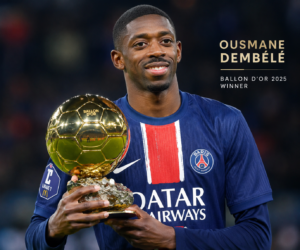
Ousmane Dembélé — The reigning champion
The reigning Ballon d’Or winner deserves serious consideration whenever the conversation turns to football’s elite. Dembélé’s victory in 2025 recognised his contribution to Paris Saint-Germain’s success and demonstrated that the award is not exclusively about scoring the most goals.
His versatility, creativity, pressing, dribbling and ability to influence attacking play make him a different kind of contender from Kane and Mbappé. His case also highlights an important question: should voters reward the player with the best statistics, or the footballer whose overall contribution makes the greatest difference to his team?
However, winning the previous edition does not guarantee another triumph. Dembélé must be judged on his performances during the 2025–26 eligibility period, his individual contribution, the trophies he helped PSG win, and his performances on the international stage.

The 2024 recipient remains a nominee, but he is a long shot in this year’s betting. His presence is a reminder that the award has previously recognised midfield influence over headline-grabbing attacking statistics.

Olise is another name on the shortlist whose technical quality and attacking influence merit recognition, although the latest betting picture places him outside the leading three.
6. What are football analysts saying?
The latest assessments show that the race is not simply about who has the biggest reputation.
Sky Sports pundits have made a strong case for Kane, particularly because of his goalscoring record and Bayern’s domestic double. Jamie Carragher argued that Kane should win, pointing to his 73 goals in a season; Paul Merson also backed Kane while acknowledging Yamal’s World Cup triumph. Other Sky pundits, including Tim Sherwood and Sue Smith, similarly favoured the England captain.
Opta Analyst’s assessment also places Kane at the front of the race, emphasising his 61 goals in 51 appearances, his 14 Champions League goals and Bayern’s domestic achievements. It nevertheless highlights the historical difficulty of winning the Ballon d’Or in a World Cup year without either winning the World Cup or lifting the Champions League.
The betting markets have also shifted. Kane is the favourite, Mbappé has shortened dramatically in the odds, and Yamal has drifted after previously occupying the leading position. Those odds reflect market expectations, however, not an official count of the ballots.
The analytical divide is clear:
-
The statistical argument favours Kane: his goals, consistency and trophies are difficult to dismiss.
-
The World Cup argument strengthens Yamal: international glory is especially influential in tournament years.
-
The individual-match argument helps Mbappé: his ability to deliver decisive performances keeps him firmly in contention.
The final result will reveal which of these arguments resonated most strongly with the voting journalists.
Does yesterday’s El Clásico affect the Ballon d’Or?

Yesterday’s El Clásico was more than a football match. It was a final, high-profile meeting between two of the leading candidates just before the world discovers who has won the award.
Real Madrid defeated Barcelona 2–1 at Camp Nou on October 25, with Mbappé scoring both goals, including the late winner. Barcelona’s Raphinha scored the equaliser. The result ended Barcelona’s nine-match winning start in La Liga and reduced the gap at the top of the table.
Mbappé could hardly have asked for a more dramatic personal statement.
He scored twice against his club’s greatest rivals, delivered the winning goal and took the spotlight away from Yamal on the eve of the ceremony.
But here is the crucial detail: the Ballon d’Or voting period had already ended on July 19, 2026. Yesterday’s match is outside the period being assessed.
That means the El Clásico result should not change the official voting outcome.
It can, however, influence public opinion, the discussion surrounding the award and the way supporters judge the candidates’ relative standing.
There is also an important distinction between a performance that changes a voter’s mind before the deadline and one that happens after the votes are locked. Mbappé’s performance yesterday is a powerful reminder of his quality, but it cannot legitimately be counted as part of the season under review.
The irony is striking: the man who may be about to win football’s most prestigious individual award is being discussed on the same night that another candidate has delivered one of the most memorable performances in the world’s biggest club rivalry.
Has the World Cup become the deciding factor?
In a World Cup year, international performances can transform the Ballon d’Or race.
The tournament provides an enormous global stage on which players are judged under intense pressure. It also offers a rare opportunity to compare the world’s best footballers while representing their countries.
Historically, winning the World Cup or the Champions League has often strengthened a candidate’s position. Opta Analyst notes that since 1990, there have been only two instances in which a player won the Ballon d’Or in a World Cup year without winning either the Champions League or the World Cup: Hristo Stoichkov in 1994 and Messi in 2010.
That historical pattern makes Kane’s candidacy particularly interesting.
He has the numbers and the domestic double, but England’s semi-final exit means he cannot claim the ultimate international prize.
Yamal, by contrast, can point to Spain’s World Cup victory, although his club performances and individual statistics must also be considered.
Mbappé’s case rests on his own exceptional individual performances, but the collective honours and his contribution to them remain central to the argument.
The World Cup is therefore a major factor, not an automatic deciding vote. The award’s stated criteria place individual performance first, followed by collective achievement and then fair play.
9. Does last year’s winner influence this year’s race?
The previous edition was won by Ousmane Dembélé in 2025, while Rodri won in 2024 and Messi claimed the award in 2023.
Dembélé’s victory matters because it demonstrated that the award can recognise a player whose influence on a successful team extends beyond a simplistic goals-only argument.
But there is no official rule requiring voters to reward a different player each year, nor is there a rule that prevents a previous winner from retaining the award.
The current race is particularly interesting because the leading candidates have different strengths.
Kane offers remarkable goalscoring and domestic success. Yamal combines creative brilliance with international glory. Mbappé has the ability to change the outcome of major matches.
The voting panel must judge them against the same criteria rather than simply rewarding the player who is most fashionable or who had the most memorable individual moment.
The 2024 Rodri–Vinícius dispute also shows why last year’s result cannot be treated as a reliable guide to the next winner. Reputation and expectations matter to public debate, but the final outcome is determined by the votes cast for the season under review.
10. Who is most likely to win tonight?
My assessment before the ceremony

The strongest overall case
His exceptional goalscoring figures, domestic double and consistency make him the most defensible favourite.

Kylian Mbappé
The strongest late challenger
His scoring record and ability to decide major games keep him in the conversation, although yesterday’s Clásico cannot alter the completed vote.

The World Cup factor
His exceptional creativity, club achievements and Spain’s international success provide a strong alternative case.
My prediction is Harry Kane, based on the latest reporting, betting markets and analysts’ assessments. He appears to have the strongest combination of goalscoring output, consistency and club honours.
However, a prediction is not a confirmation. Until the official announcement, the result remains uncertain. Mbappé’s late momentum and Yamal’s international achievements mean the contest cannot be treated as a foregone conclusion.
The women’s Ballon d’Or is a separate contest. The latest betting picture identifies Alexia Putellas as the leading contender, with Ewa Pajor and reigning winner Aitana Bonmatí among her principal challengers.
The bigger question: Is the Ballon d’Or still the ultimate measure of greatness?
The Ballon d’Or remains one of football’s most powerful symbols of individual excellence. Its prestige comes from its history, the calibre of its winners and the global attention surrounding the ceremony.
Yet it is not a scientific measurement of who is objectively the best footballer in the world.
It is a judgment made by a defined group of journalists, using agreed criteria that still leave room for interpretation.
That explains why fans can disagree passionately without necessarily being wrong. One supporter may prioritise goals; another may value trophies; another may believe that controlling a game, creating chances or inspiring a team matters more than individual statistics.
The controversies are unlikely to disappear because football itself does not offer one universally accepted formula for measuring greatness.
And that is what makes tonight’s ceremony so compelling.
Kane is chasing a historic achievement for English football. Mbappé is seeking recognition for another season among the world’s elite. Yamal is attempting to turn extraordinary talent into the ultimate individual honour.
One of them may leave London with the golden trophy. The others will leave with the same challenge every great footballer faces: proving that their football, rather than a voting result, is what makes them exceptional.
Because the Ballon d’Or may settle a debate for one night, but in football, the argument over who is truly the best never ends.
About The Author