
2027: EU Rejects Calls To Sanction Nigerian Politicians Over Electoral Violence
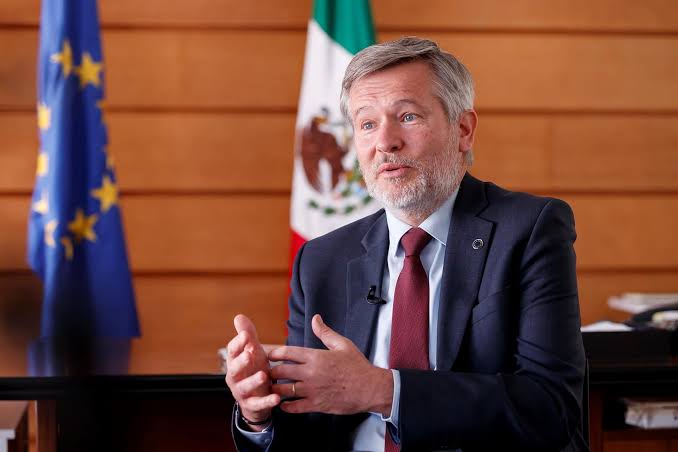
Ambassador says punishing political stakeholders is not the EU’s responsibility
Warns violence, hate speech threaten credible elections
Backs deployment of 5,500 observers
The European Union (EU) has ruled out imposing sanctions on Nigerian politicians and political stakeholders over rising electoral violence ahead of the 2027 general elections, insisting that holding Nigerian actors accountable is the responsibility of the country’s institutions.
EU Ambassador to Nigeria and ECOWAS, Gautier Mignot, made the position clear during an appearance on Channels Television’s The Morning Brief on Thursday.
Mignot said the EU’s responsibility was to support Nigeria’s democratic process, empower relevant institutions and strengthen civil society rather than punish political actors.
He questioned the expectation that international partners should impose sanctions on Nigerian politicians over inflammatory speeches and other electoral offences.
“What kind of conception of Nigerian sovereignty is that if you expect from an international partner to sanction, give punishments, give good marks, bad marks to your political and institutional stakeholders? This is not our role,” he said.
ADVERTISEMENT

The ambassador stressed that the EU was already supporting Nigeria through democratic interventions, including empowering civil society organisations to deploy 5,500 election observers during the 2027 polls.
He also said the EU recently partnered with the Independent National Electoral Commission (INEC) and civil society organisations on a simulation exercise designed to test responses to misinformation, particularly content generated through artificial intelligence.
Mignot further dismissed comparisons between electoral offences in Nigeria and the sanctions imposed on Russia over its war against Ukraine, describing such expectations as misplaced.
According to him, the EU cannot be expected to sanction individuals across nearly 200 countries whenever they violate democratic standards.
However, the EU ambassador expressed serious concern over the growing cases of political violence, hate speech, intimidation and threats against democratic participation ahead of the 2027 elections.
He warned that such incidents could undermine Nigeria’s democratic gains, discourage voters and weaken public confidence in the electoral process.
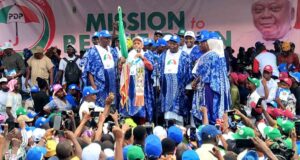
Recent incidents have heightened concerns, including the reported attack on APC supporters travelling for a campaign flag-off in Funtua, Katsina State, in October, which left a female passenger injured and several vehicles damaged. Police subsequently announced 14 arrests.
Similarly, the convoy of former Anambra State Governor and presidential candidate of the Nigeria Democratic Congress (NDC), Peter Obi, was attacked in Calabar, Cross River State, on November 4, with vehicles damaged and a suspect arrested.
Another attack on an NDC political procession along Nnebisi Road in Asaba, Delta State, on November 7 reportedly left one person dead and five others injured.
The National Peace Committee also disclosed that it had recorded 60 election-related incidents within one month, including violence, intimidation and threats.
Read also 2027: Atiku’s supporters storm Abuja court, demand judgment copy after ADC candidacy setback
ADC Crisis Deepens As Court Declares Nafiu Bala’s Resignation Letter Fake
Osun, UK Seal Digital Partnership to Boost Connectivity, Create Jobs
At a Civil Society and Human Rights Defenders Forum in Abuja, organised by the National Human Rights Commission (NHRC), Mignot reiterated the EU’s commitment to supporting Nigerian institutions and civil society organisations.
He maintained that free media, peaceful assembly, open civic spaces and active civil society participation were essential to transparent and credible elections.
The Executive Secretary of the NHRC, Dr Tony Ojukwu, SAN, also warned that democracy was under threat when citizens could not speak, assemble or participate in political activities without intimidation.
He expressed concern over political and voter intimidation, hate speech, incitement, harassment of journalists, arbitrary arrests and the exclusion of women, young people and persons with disabilities through prohibitive nomination fees.
Ojukwu particularly condemned the apparent lack of accountability for electoral offences, warning that perpetrators would continue to test the system if they could commit crimes and escape punishment.
“These are warning lights, not yet verdicts. The window to correct course is now,” he said.
Meanwhile, the National Chairman of the Inter-Party Advisory Council (IPAC), Dr Yusuf Dantalle, urged political parties, candidates and their supporters to embrace issue-based campaigns, political tolerance and responsible communication.
He warned that political competition ahead of 2027 must not degenerate into warfare, stressing that political opponents should not be treated as enemies.
IPAC called on all stakeholders to reject electoral violence, hate speech, voter suppression and political intimidation.
With 2027 approaching, the message from the EU, NHRC and IPAC is clear: Nigeria’s democratic future must not be sacrificed on the altar of political desperation.
About The Author