

Panic As Bomb Threats Force Mass Evacuation Of Schools Across Italy
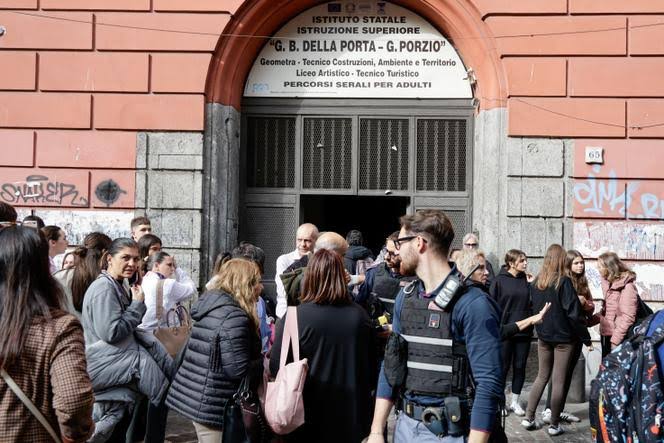
Italian PM Giorgia Meloni says there is no concrete danger, as threats target about 6,000 schools; similar hoax alerts have been reported in Britain and Ireland.
Panic and confusion swept across Italy on Wednesday as schools in different parts of the country were evacuated following a wave of bomb threats targeting thousands of educational institutions.
However, Prime Minister Giorgia Meloni has assured the public that preliminary security checks have revealed no evidence of a credible threat.
According to Italian news agency Ansa, citing the Education Ministry, threatening emails were sent to approximately 6,000 schools, although the exact number of institutions that evacuated students remains unclear.
The threats triggered emergency evacuations, with hundreds of students seen gathering outside school buildings in cities including Rome and Milan.
Some students reportedly abandoned their belongings as they hurried out of classrooms following instructions from school authorities.
At Virgilio High School in Rome, 19-year-old student Sofia De Ponte said the principal announced that a bomb threat had been received by email before ordering an immediate evacuation.
She said students were still waiting for security personnel to arrive, amid reports that several schools were requesting police assistance simultaneously.
Another student, Elena Sicignano, said they remained outside the premises awaiting further instructions.
While some students appeared relieved to have escaped classroom activities, others were visibly frightened.
At Brera School in Milan, art teacher Violetta Uboldi said some pupils appeared excited when they were told to leave school.
But 16-year-old student Angelica said the situation initially caused panic because teachers made it clear that the evacuation was not a drill.
Italian media reported that one of the threatening emails was purportedly signed by a person identified as Mikhail Andropov, described as the leader of the so-called Vilayat of Misoginistan.
The sender claimed to have planted a powerful explosive inside a school, threatening to detonate it remotely.
Responding to the incident, Meloni convened a meeting with security and intelligence officials to review the situation and coordinate investigations.
In a Facebook statement, the prime minister said preliminary checks had not uncovered anything suggesting a concrete danger, adding that the threats appeared designed to create widespread fear and disruption.
Antonello Giannelli, president of the ANP association of Italian school heads, also described the threats as clearly fake.
However, he warned that irresponsible individuals could exploit modern communication technology to cause massive disruption across the country.
The incident is not isolated, as similar threatening emails were reported in Britain and Ireland on Wednesday, prompting investigations by authorities.
Read also Tinubu Splashes N100m Savings Bonds On Each Flamingos Player After Historic World Cup Triumph
2027: Atiku’s supporters storm Abuja court, demand judgment copy after ADC candidacy setback
Pope Leo XIV Discharged After Lung Cancer Surgery, Set for First Public Appearance
Police in both countries urged schools not to evacuate their premises, describing the messages as hoaxes. However, The Herald reported that several schools in Scotland had already sent pupils home.
The latest threats come amid growing concerns across Europe over a series of suspicious incidents, including fake bomb alerts targeting flights and cyberattacks on supermarket refrigeration systems in several countries.
Italian Foreign Minister Antonio Tajani also recently disclosed that cybercriminals were targeting him and circulating his personal information online over Italy’s support for Ukraine.
The growing wave of cyber-related disruptions and security threats has intensified concerns about possible escalation in hybrid warfare across Europe.
About The Author