
Ebola: NCDC Sets November 13 Deadline For Monitoring 62 Contacts As States Step Up Surveillance
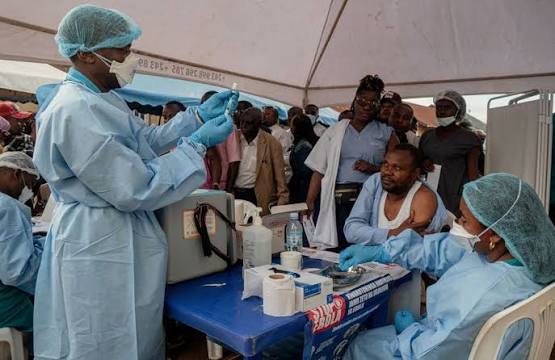
Nigeria has intensified its response to the imported Ebola case confirmed in Abuja, with the Nigeria Centre for Disease Control and Prevention (NCDC) projecting November 13, 2026, as the final date for completing the monitoring of 62 identified contacts.
In its latest Ebola Disease Situation Report, the agency said the contacts were scheduled to complete their 21-day follow-up at different times between October 31 and November 13.
The NCDC, however, stressed that contact tracing and surveillance activities were still ongoing, with additional contact tracers mapped and trained to strengthen monitoring.
It also disclosed plans to assess additional contacts for possible evacuation to quarantine facilities, review contact-tracing strategies and strengthen the identification and management of suspected infections.
Read also: NCDC clears two suspected Ebola cases in Adamawa after negative test results
Ebola Scare: NCDC Identifies Two Suspected Cases in North-East Nigeria
On laboratory investigations, the agency revealed that 18 samples had been tested since the outbreak was confirmed, with only one testing positive and 17 returning negative results.
The positive result was from the index case, while the negative samples comprised 15 collected from contacts and two from suspected cases.
The NCDC further disclosed that the National Incident Management System had been activated under the leadership of the Coordinating Minister of Health and Social Welfare, Professor Muhammad Ali Pate, with an Incident Action Plan finalised to coordinate response activities.
As part of efforts to strengthen case management, the University of Abuja Teaching Hospital has been assessed and engaged on its readiness to serve as an isolation and treatment centre. A dedicated ambulance has also been secured for safe patient referrals.
The agency said it would sustain uninterrupted laboratory testing at the National Reference Laboratory while expanding testing capacity to Lagos.
Meanwhile, the two suspected Ebola cases identified in Yola, Adamawa State, have tested negative following two rounds of laboratory investigations.
NCDC Director-General, Dr Jide Idris, said the individuals were immediately isolated after presenting symptoms suggestive of the disease, while samples were collected for testing.
He confirmed that the results ruled out Ebola infection in both individuals, stressing that the confirmed case in the Federal Capital Territory remained Nigeria’s only laboratory-confirmed infection.
Premium Times had reported that the suspected cases involved a 34-year-old pilot and his wife, a medical doctor, who were admitted to the isolation centre of Modibbo Adama University Teaching Hospital in Yola.
According to the newspaper, the couple reportedly experienced symptoms including fever, vomiting, fatigue, headache, and unexplained bleeding.
Idris commended the Adamawa State health authorities for their swift response, assuring that the NCDC would continue providing technical support to strengthen surveillance.
Kaduna activates isolation hospital
In a related development, the Kaduna State Government has activated its infectious disease hospital in Mando and intensified surveillance across healthcare facilities as part of efforts to prevent a possible outbreak.
The state’s Director of Public Health, Dr Sadique Abubakar, disclosed that the government had completed a readiness assessment, strengthened community sensitisation and equipped selected hospitals with essential medical supplies.
He said isolation facilities had been prepared, while drugs, medical commodities and personal protective equipment had been provided to support emergency response.
Abubakar added that rapid response teams and public health emergency structures were active, with radio, television and community engagement platforms being used to educate residents.
He, however, clarified that no contacts linked to the confirmed index case had been identified in Kaduna State.
Kano steps up border, motor park screening
Similarly, the Kano State Centre for Disease Control (KNCDC) has intensified surveillance at border points and motor parks to prevent the possible spread of the virus.
In an advisory issued on October 31, the agency announced the activation of its emergency operations centre and directed health personnel to screen travellers for symptoms including fever, fatigue, vomiting, diarrhoea and unexplained bleeding.
Travellers are also to be questioned about their travel history and whether they have experienced any of the symptoms within the preceding 21 days.
The KNCDC directed that anyone suspected of having the disease should be isolated in a designated area without direct handling, while relevant disease surveillance officers and the State Public Health Emergency Operations Centre must be notified immediately.
It also ordered the provision of handwashing facilities, soap and 0.05 per cent chlorine solution at designated locations, alongside the use of appropriate personal protective equipment.
The agency called for collaboration with traditional rulers, motor park leaders and the National Union of Road Transport Workers to strengthen surveillance and ensure prompt reporting of suspected cases.
It also warned against stigmatising travellers from the North-East or any other part of the country, urging health personnel to conduct screenings professionally and respectfully.
How Nigeria’s Ebola outbreak started
Nigeria confirmed its first case of the current Ebola outbreak on October 20, 2026, after laboratory tests detected the Bundibugyo virus in a woman who travelled to the country from Uganda.
The World Health Organisation said the patient developed symptoms on October 7, four days after arriving in Nigeria, and sought medical attention at a private health facility in Abuja on October 11.
She was subsequently evacuated to Switzerland on October 26 for further medical care, alongside her husband, who was identified as a close contact.
The confirmation made Nigeria the fifth country to detect the virus since the outbreak was declared in the Democratic Republic of the Congo on May 15, 2026.
The NCDC had earlier explained that contacts would be monitored for 21 days from their last possible exposure, covering healthcare workers, patients, caregivers, household members, and others who might have had contact with the infected patient.
With November 13 projected as the completion date for monitoring the currently identified contacts, health authorities are maintaining surveillance and strengthening preparedness across states to prevent further transmission.
About The Author