
2027: ‘Rig and die’ warning targets election riggers, not voters – Omo-Agege
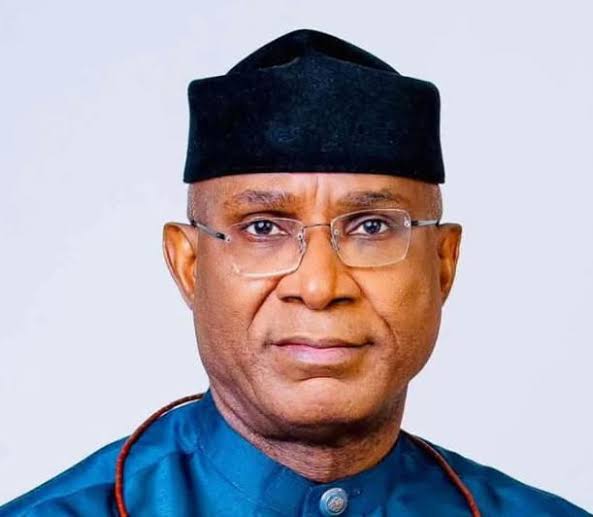
Former Deputy President of the Senate, Ovie Omo-Agege, has defended his controversial “rig and die” remark, insisting it was a warning to election riggers, not a threat to voters.
Omo-Agege said the statement was aimed at those who manipulate election results, steal ballot materials and undermine the people’s mandate ahead of the 2027 elections.
In a statement signed by his Special Adviser on Strategy and Communication, Godwin Anaughe, the former lawmaker described electoral rigging as “political robbery” and a coup against the electorate.
He insisted that his message was a call for Nigerians to resist electoral fraud and defend democracy within the provisions of the Constitution.
“‘RIG AND DIE’ simply entails that every rigging machinery will be defeated and crushed by popular resistance,” he declared.
Omo-Agege also demanded an end to alleged electoral malpractice, including result manipulation, vote buying, impersonation of security personnel and attempts to bypass the Bimodal Voter Accreditation System (BVAS).
Read also Tinubu Seeks Fresh $20.5bn, €1.04bn Loans as 2027 Elections Near
2027: Atiku Accuses Tinubu of Plotting to Use $20.52bn Loan as Campaign Slush Fund
‘Oborevwori, Dafinone cannot win a fair election’
The former senator took a swipe at Delta State Governor Sheriff Oborevwori, Senator Ede Dafinone and the ruling All Progressives Congress (APC), alleging that they could not win a free and fair election.
He accused Oborevwori’s administration of wasting over ₦5 trillion without commensurate results, while claiming Dafinone lacked grassroots support and a strong legislative record to campaign on.
“Their only hope is to write results. That is why a call to defend votes sounds like a death sentence to them,” he alleged.
The claims were made by Omo-Agege’s camp and were not independently established in the statement.
Omo-Agege invokes Tinubu, Buhari
Defending his choice of words, Omo-Agege cited past comments by President Bola Tinubu and former President Muhammadu Buhari on electoral malpractice.
He recalled that Tinubu, then APC national leader, had used the phrase “rig and roast” in 2014, while Buhari warned in 2019 that ballot-box snatchers would face deadly consequences.
Omo-Agege questioned why those statements were accepted as defences of democracy while his own “rig and die” remark was being criticised.
He described the criticism as hypocrisy and selective amnesia.
ADV

Reopens Senate mace controversy
The former deputy Senate president also revisited the controversy surrounding the Senate mace incident, rejecting allegations that he had gone to steal the legislative symbol.
He maintained that his return to the Senate chamber followed a Federal High Court judgment nullifying his suspension, arguing that his actions were aimed at defending the Constitution and legislative independence.
Omo-Agege said the courts subsequently exonerated him and pointed to his emergence as Deputy President of the Senate as evidence of the confidence his colleagues placed in him.
Alleges he was rigged out in 2023
Omo-Agege further alleged that he won the 2023 Delta governorship election but was denied victory through manipulation of results, particularly in parts of Delta North.
He accused former Governor Ifeanyi Okowa, Oborevwori and some APC figures of working together to undermine his mandate.
The former senator said he pursued legal remedies rather than resorting to unlawful action, but alleged that the system ultimately failed to deliver justice.
He vowed that attempts to manipulate the 2027 elections in Delta State would face resistance at polling units.
ADV

“Senator Ovie Omo-Agege did not threaten voters. He did not threaten INEC or the police,” the statement said, insisting that the warning was directed at those allegedly planning to steal votes.
The controversy adds to the growing political tension ahead of the 2027 elections, with Omo-Agege’s remarks raising fresh questions about electoral security, political rhetoric and the protection of voters’ mandates.
About The Author