
Ebola: NCDC Offers Contacts ₦100,000 Weekly as 53 People Face Surveillance
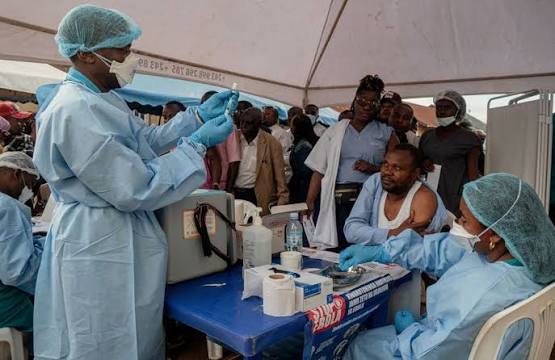
The NCDC has approved ₦100,000 weekly support for people placed in isolation or quarantine, as health officials track 53 contacts linked to Nigeria’s confirmed Ebola case.
The Nigeria Centre for Disease Control and Prevention (NCDC) has approved an emergency payment of ₦100,000 per person weekly for individuals placed in isolation or quarantine as Nigeria intensifies efforts to contain the Ebola outbreak in the Federal Capital Territory (FCT).
The financial support comes as the agency confirms that 53 contacts, including healthcare workers, the patient’s spouse and domestic staff, are under surveillance following the confirmed case.
NCDC Director-General, Dr Jide Idris, announced the payment at a press briefing in Abuja on Sunday, explaining that the decision followed concerns raised by contacts about feeding, accommodation and providing for their families while under monitoring.
According to Idris, the emergency support is intended to ease their financial burden and encourage cooperation with public health officials.
“This was not planned for, but it is an emergency. We will continue to review it as we go along,” he said.
Read also Ebola Scare: NCDC Identifies Two Suspected Cases, One Tests Negative
Ebola: FG Links Nigeria’s Confirmed Case to Kenya Strain, Launches Probe
Osun on Ebola Alert, Approves New Onijabe of Ijabe, 13 Other Traditional Rulers
53 Contacts Tracked After Confirmed Case
The NCDC’s Ebola Disease Situation Report, dated October 24, disclosed that 53 contacts linked to the index case had been identified, categorised and placed under follow-up.
The index case is a 42-year-old woman who returned to Nigeria from Uganda through Addis Ababa on October 3, 2026.
She reportedly developed symptoms four days later and visited private health facilities on October 10 and 11 before the NCDC was notified on October 19.
The agency confirmed the infection on October 20 following laboratory testing at its National Reference Laboratory.
Her symptoms included fever, diarrhoea, generalised body aches and a sore throat. No bleeding was reported.
Meanwhile, a suspected Ebola case reported by Rivers State on October 23 tested negative, according to the NCDC.
NCDC Warns Nigerians: Cooperate With Health Officials
Idris said public health teams were working to identify everyone who may have been exposed to the confirmed case, assess their risk and monitor them for 21 days after their last possible exposure.
The exercise covers healthcare workers, patients, caregivers, household members, travel-related contacts and others who may have had relevant contact with the patient.
He urged Nigerians contacted by public health officials to provide accurate information about their movements, contacts and symptoms.
“Being identified as a contact does not mean that you have Ebola,” Idris stressed, explaining that the process was necessary to detect possible infections early and prevent further transmission.
He also reassured Nigerians that the Federal Government, the Federal Ministry of Health and Social Welfare, the NCDC, FCT health authorities and response partners were implementing a coordinated emergency response.
Hospitals Put On Alert
The NCDC chief called on public and private healthcare facilities nationwide to immediately strengthen infection prevention and control measures.
He said hospitals must maintain proper screening and triage procedures, observe strict hand hygiene, ensure safe injection practices and improve environmental cleaning and medical waste management.
Healthcare facilities were also urged to ensure that appropriate personal protective equipment was available and that workers knew how to use it correctly.
Idris warned that suspected cases must be promptly separated from other patients and reported to the relevant public health authorities without waiting for laboratory confirmation before taking protective measures.
He commended healthcare workers whose vigilance and clinical judgement helped trigger the response, describing their role as critical to containing the outbreak.
NCDC Calls On States To Prepare
Beyond the immediate response in the FCT, Idris urged state governments to strengthen their financial and logistical preparedness for public health emergencies.
He warned that containing outbreaks should not be left to the FCT alone, stressing the need for coordinated action across the country.
The NCDC says its response is being coordinated through an Incident Management System and an Emergency Operations Centre, with national leadership involving the Coordinating Minister of Health and Social Welfare, Professor Muhammad Ali Pate, and the Presidential Task Force on Ebola Virus Disease.
As contact tracing continues, the agency is urging Nigerians to remain calm, cooperate with health officials, and report relevant symptoms or exposure histories promptly.
The message from the NCDC is clear: contact tracing, early detection, and strict hospital precautions remain critical to stopping further transmission.
About The Author