
FG Challenges World Bank’s ₦7.7tn Interest Bill, Defends $1.25bn Loan With Repayment Stretching to 2060
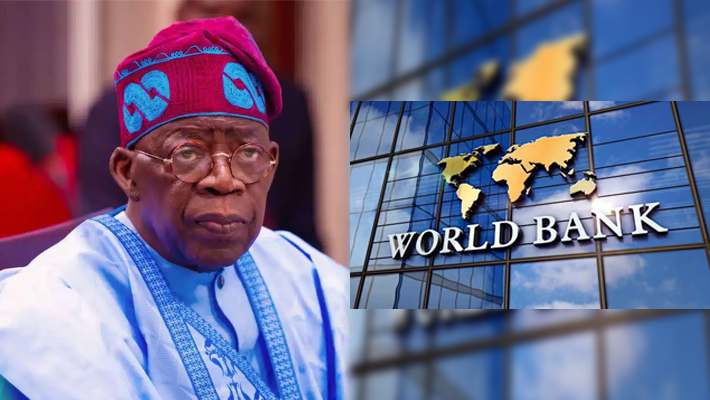
The Federal Government has challenged the World Bank’s assessment of Nigeria’s debt burden, insisting that a reported ₦7.7 trillion in interest payments in the first half of 2026 does not signal fiscal distress, while defending its controversial borrowing programme.
The government’s response comes amid growing concerns over Nigeria’s rising debt obligations, with fresh details showing that principal repayments on a $1.25 billion World Bank loan will begin in December 2031 and extend to June 2060 for one of the facilities.
In a statement issued by the Federal Ministry of Finance and shared by Minister of Finance and Coordinating Minister of the Economy, Taiwo Oyedele, the government described the World Bank’s debt assessment as misleading, arguing that it failed to capture the full picture of federal revenue and debt obligations.
The World Bank’s October 2026 Nigeria Development Update put Federal Government revenue at ₦6.2 trillion and interest payments at ₦7.7 trillion for the first half of the year. Based on those figures, The PUNCH calculated that interest payments amounted to approximately 124.2 per cent of revenue, exceeding earnings by ₦1.5 trillion.
But the Finance Ministry argued that the calculation was flawed because the interest bill included debts serviced by the Federal Government on behalf of state governments, while the revenue figure excluded income earned by government agencies and enterprises but not yet remitted to the Treasury.
It also maintained that revenue collection is typically higher in the second half of the year because certain tax payments are statutorily due at specific times.
‘Revenue Growing Faster Than Interest Costs’
Defending the government’s economic reforms, the ministry said federal revenue rose 72 per cent, from ₦3.6 trillion in the first half of 2025 to ₦6.2 trillion in the same period of 2026.
Interest payments, however, rose by 38 per cent, from ₦5.6 trillion to ₦7.7 trillion.
According to the government, the interest-to-revenue ratio consequently dropped from 156 per cent to 124 per cent, while the gap between interest payments and revenue narrowed from ₦2 trillion to ₦1.5 trillion.
The ministry also cited a full-year debt-service-to-revenue ratio below 60 per cent, compared with 97 per cent before the current administration’s reforms.
It further pointed to the World Bank’s projection that Nigeria’s full-year 2026 debt service, covering both principal and interest, would stand at 46 per cent of revenue.
“This is the result of reforms working, not a sign of fiscal distress,” the ministry declared.
However, despite challenging the World Bank’s assessment, the government did not provide revised figures for revenue and interest payments or an alternative ratio to substantiate its position.
Read also SERAP Drags INEC to Court Over Alleged ₦126bn Missing Electoral Funds
‘You Lied!’ Presidency Fires Back at Makinde Over ₦250bn NLNG Dividends Claim
FG Defends Borrowing, Says All Loans Are Legal
The Federal Government also dismissed concerns about its borrowing programme, insisting that every naira borrowed by the current administration falls within limits approved by the National Assembly under the 2026 Appropriation Act and the approved borrowing plan.
It said its borrowing activities comply with the Fiscal Responsibility Act 2007 and the Debt Management Office (Establishment) Act 2003, adding that details of the country’s debt obligations are regularly published.
The government urged analysts and commentators to assess public finances using comparable figures and the appropriate fiscal context.
$1.25bn World Bank Loan: Repayment Begins in 2031
Meanwhile, financing agreements reviewed by The PUNCH show that Nigeria will begin repaying the principal on a $1.25 billion World Bank loan on December 15, 2031.
The facility comprises a $750 million concessional credit from the International Development Association and a $500 million loan from the International Bank for Reconstruction and Development.
While the IDA credit is scheduled to be fully repaid by June 2051, repayments on the IBRD loan will continue until June 15, 2060, meaning the obligations will stretch across several administrations.
The agreements were signed on behalf of Nigeria by Taiwo Oyedele on October 6, 2026, while the World Bank’s Country Director, Mathew Verghis, signed on June 30, 2026.
Under the repayment schedule, Nigeria will pay $18.75 million in principal every six months on the IDA credit, equivalent to $37.5 million annually during full repayment years.
For the IBRD facility, regular principal instalments will amount to approximately $8.6 million every six months, followed by a final payment of about $9.8 million in June 2060.
Combined, the facilities will require approximately $27.35 million in principal repayments every six months between December 2031 and June 2051, excluding interest and other applicable charges.
The agreements do not specify a fixed total dollar amount for interest payments over the full repayment period. The eventual cost will depend on applicable interest rates and other contractual provisions.
What Is the $1.25bn Loan Meant to Achieve?
The World Bank facility is designed to support reforms aimed at expanding access to credit, improving electricity supply, strengthening trade competitiveness and increasing government revenue.
The programme also covers digital services, agricultural reforms, tax administration and measures to attract private investment into the electricity sector.
Other provisions include trade reforms under the African Continental Free Trade Area, electronic invoicing for Value Added Tax, a 15 per cent minimum effective tax rate for large companies and multinational enterprises, and an increase in the maximum personal income tax rate from 24 to 25 per cent.
The agreements also impose reporting and accountability requirements on the government, including the maintenance of dedicated dollar accounts for loan proceeds, transaction reporting and independent audits.
The $500 million IBRD facility is divided into two withdrawal tranches, with the release of the second tranche dependent on satisfactory implementation of agreed reforms and maintenance of an adequate macroeconomic framework.
The World Bank may cancel part or all of the undisbursed balance if Nigeria fails to take satisfactory corrective measures within 90 days of receiving notice.
Both financing agreements have a closing date of December 31, 2027.
While the government insists that its reforms are improving Nigeria’s fiscal position, the reported ₦7.7 trillion interest bill and the long repayment timeline attached to the $1.25 billion facility are likely to keep public borrowing and debt sustainability firmly in the spotlight.
About The Author