
‘QUIT 2027 RACE IF YOU CAN’T CAMPAIGN’ — MAKINDE’S FIRES AT TINUBU
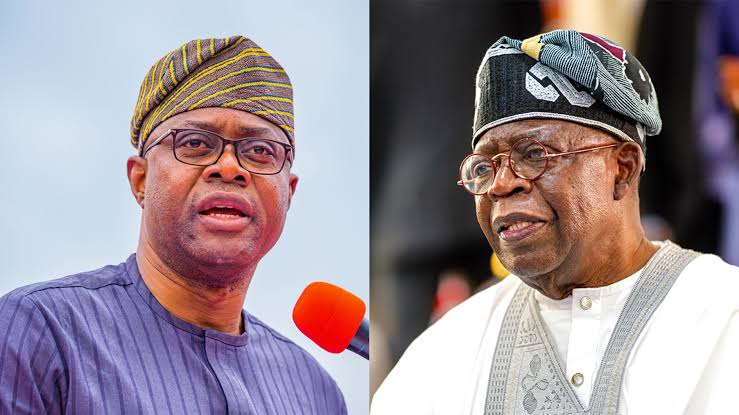
Makinde’s team accuses the President of dodging Nigerians, says failed promises, rising poverty and insecurity make his re-election bid difficult to defend.
The political battle for 2027 is heating up, with Governor Seyi Makinde’s presidential campaign organisation challenging President Bola Tinubu to hit the campaign trail or quit the race.
Makinde’s camp accused Tinubu of avoiding Nigerians because he allegedly has little to show for his 2023 campaign promises, insisting that a president confident in his performance should have no fear of facing voters.
The Director of Strategic Communications for the campaign organisation, Richard Ihediwa, made the position known in a statement on Thursday, following Tinubu’s indication that he might not join the All Progressives Congress campaign team on its nationwide tour ahead of the 2027 elections.
Tinubu reportedly said he would rather concentrate on governance than accompany the campaign team across the 36 states and the Federal Capital Territory.
But Makinde’s camp is having none of it.
It described the president’s decision as an affront to the electorate, arguing that his absence from campaign rallies raises questions about his willingness to account for his administration’s performance.
“A President who believes he has performed well should be confident to defend his record before the people,” the statement declared.
The campaign organisation further alleged that Tinubu’s reluctance to campaign nationwide reflected concerns over public anger and the state of the country under his administration.

ECONOMIC HARDSHIP, INSECURITY UNDER FIRE
Makinde’s camp listed worsening electricity supply, rising tariffs, economic hardship and insecurity among the issues it believes Tinubu must answer for before seeking another term.
It also criticised the removal of petrol subsidy and the naira’s foreign exchange reforms, accusing the Federal Government of implementing policies without adequate protection for vulnerable Nigerians.
According to the statement, millions of households have been pushed deeper into hardship, with hunger rising, purchasing power shrinking and poverty becoming increasingly unbearable.
On security, the campaign organisation accused the administration of failing to contain terrorists, bandits, kidnappers and other criminal groups, alleging that Nigerians continue to suffer killings and abductions.
It argued that these challenges explain why Tinubu should be prepared to defend his record directly before the electorate rather than avoid the campaign trail.
The group also questioned the APC’s commitment to a free, fair and credible election, although it provided no evidence in the statement to substantiate the allegation that the party intended to compromise the process.

‘NIGERIANS WANT AN ACTIVE PRESIDENT’
Makinde’s camp insisted that if Tinubu could not travel across the country to solicit votes, he should reconsider his re-election bid.
It described the president as an absentee and lethargic leader, arguing that Nigerians need a youthful, energetic president capable of leading from the front.
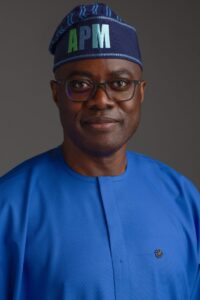
The organisation promoted Makinde, the presidential candidate of the Allied People’s Movement (APM), as an alternative, citing his record in Oyo State and his proposed Reset Nigeria Agenda.
The campaign said Makinde had been travelling across the country, meeting voters and presenting his plans for addressing Nigeria’s economic, security and social challenges.
MAKINDE QUESTIONS TINUBU’S ECONOMIC REFORMS
Beyond the campaign controversy, Makinde has also challenged the Federal Government’s economic reform narrative, arguing that improved economic indicators mean little if ordinary Nigerians are becoming poorer.
In a newsletter released on Thursday, the Oyo governor compared his administration’s approach to governance with Tinubu’s handling of the national economy.
Makinde acknowledged that petrol subsidy removal and a more flexible foreign exchange regime had economic arguments behind them. However, he insisted that the real test of reform was how its consequences affected citizens.
“Policies tell you what a government wants to change. The order in which it chooses to make those changes tells you how that government thinks,” he said.
He argued that leadership was about deciding which obligations to meet first, what to postpone and who should bear the cost of government decisions.
‘WE PAID SALARIES AND BUILT INFRASTRUCTURE’
Makinde said his administration, which began in 2019, prioritised workers’ salaries, pensions and inherited gratuity arrears while continuing infrastructure development.
According to him, the state pursued development across the economy, education, healthcare and security without abandoning its obligations to workers and pensioners.
“We could have said the government needed the money for infrastructure and asked workers and pensioners to wait.
“Instead of choosing between paying people and building infrastructure, we chose to do both. We paid salaries consistently. We regularised pension payments. We began clearing inherited gratuity arrears,” he said.
The governor disclosed that personnel costs accounted for about 70 per cent of Oyo State’s federal receipts during the four years under discussion.
He said the state also adopted an Alternative Project Funding Approach, allowing contractors to finance selected projects upfront while the government repaid the costs over an agreed period.
Makinde maintained that his administration accepted the financial burden of meeting its obligations while pursuing infrastructure development.
Read also :
2027: Tinubu Won’t Follow APC Campaign Train to Every State
RIVERS GAS EXPLOSION: 20 INJURED, 50 HOUSES DESTROYED AS RESIDENTS ALLEGE 3-WEEK WARNING IGNORED
‘23 MILLION MORE NIGERIANS IN POVERTY’
Taking aim at the Federal Government’s economic scorecard, Makinde claimed that Nigeria’s poverty rate had increased from about 56 per cent in 2023 to approximately 62 per cent in 2026.
He said this represented roughly 23 million additional Nigerians living in poverty, arguing that the gains in macroeconomic stability highlighted by the World Bank and the International Monetary Fund had not translated sufficiently into better living conditions for citizens.
“These 23 million are not just numbers. They are our parents, neighbours, friends and children,” he said.
The governor insisted that economic reforms must be judged not only by figures but also by their impact on jobs, household incomes and living standards.
“And if, after four years, a leader has not been able to make those choices work for the people, Nigerians have every right to say: let us try someone else,” Makinde added.
With the 2027 presidential contest approaching, Makinde’s camp is turning economic hardship, insecurity and Tinubu’s campaign plans into fresh political ammunition.
The big question is whether the president will take the battle directly to Nigerians or leave his party’s campaign team to carry the fight without him.
About The Author