
FIRST NIGER BRIDGE REOPENS AFTER REPAIRS, UMAHI FLAGS DREDGING THREAT
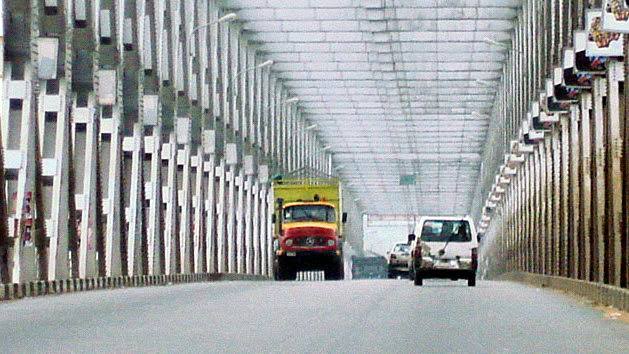
The Federal Government has reopened the First Niger Bridge to motorists following emergency repairs aimed at strengthening the ageing structure and improving road safety.
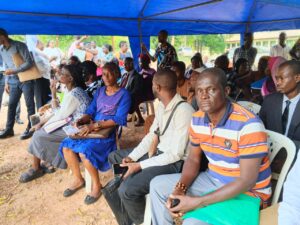
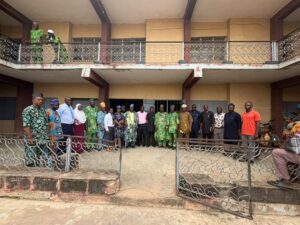
Minister of Works, David Umahi, announced the reopening at a ceremony in Asaba, Delta State, declaring the bridge ready for public use after weeks of maintenance work.
The bridge, a major transport link connecting the South-East and South-South, was closed from September 7 to 21, 2026, to allow emergency rehabilitation. However, persistent rainfall reportedly delayed the completion of the work.
Umahi said the intervention became necessary following concerns over the bridge’s deteriorating condition, including missing bolts on steel components, damaged sections and poor maintenance.
The rehabilitation covered structural repairs, resurfacing, solar-powered streetlights and the installation of Closed-Circuit Television cameras.
Median barriers and three designated turnaround points were also introduced to improve traffic management and provide safer options during emergencies and vehicle breakdowns.
The minister disclosed that security monitoring centres were being established at both ends of the bridge to strengthen surveillance and protect the infrastructure.
FG WARNS AGAINST SAND DREDGING NEAR BRIDGE
Beyond the repairs, Umahi raised the alarm over alleged sand dredging activities close to the bridge, warning that such operations could threaten its structural stability.
He said federal regulations prohibit sand dredging within a 10-kilometre radius of federal bridges and directed relevant officials in Delta and Anambra states to enforce the restriction.
Umahi warned that officials who fail to enforce the directive could face disciplinary action.
FG MOVES AGAINST DETERIORATING BENIN-ASABA EXPRESSWAY
The minister also announced plans for a comprehensive redesign of the Benin-Asaba Expressway ahead of its reconstruction, citing the road’s deteriorating condition.
He disclosed that the Federal Government had terminated the remedial contract covering the first 11 kilometres of the highway over concerns about the quality of work.
Umahi expressed confidence that the planned intervention would deliver lasting relief to motorists who depend on the busy route.
He further unveiled plans to reconstruct about 400 kilometres of the East-West Road, describing it as a spur of the 750-kilometre Lagos-Calabar Coastal Highway.
Other projects highlighted include sections of the Enugu-Onitsha Expressway and the Second Niger Bridge bypass.
OBOREVWORI, ASAGBA PRAISE TINUBU
Delta State Governor, Sheriff Oborevwori, commended President Bola Tinubu for responding to concerns over the safety of the First Niger Bridge.
Represented by the Commissioner for Works (Rural Roads) and Public Information, Charles Aniagwu, the governor said the rehabilitation highlighted the importance of maintaining public infrastructure before its condition deteriorates further.
Oborevwori noted that Umahi’s three visits to the bridge within two months demonstrated the Federal Government’s commitment to addressing the concerns.
He stressed that the bridge remained a critical economic corridor between the South-South and South-East, warning that any collapse would have devastating consequences for trade, businesses and human movement.
The Asagba of Asaba, Epiphany Azinge, SAN, also praised Tinubu and Umahi for completing the rehabilitation, describing it as a major intervention that could extend the bridge’s lifespan.
Azinge said the bridge remained central to the economic and social relationship between Delta and Anambra states and the wider regions.
He described the exercise as potentially the second most extensive rehabilitation of the bridge since its construction shortly before the Nigerian Civil War.
Read also
2027: Tinubu Won’t Follow APC Campaign Train to Every State
Osun Enforces Thursday Sanitation, Orders Businesses Out 8am–10am
The monarch, however, urged the Federal Government to accelerate other critical road projects, particularly the reconstruction of the Benin-Asaba Expressway.
The First Niger Bridge’s latest rehabilitation was aimed at restoring confidence in its safety and ensuring the continued movement of people and goods across one of the country’s most important transport corridors.
About The Author