
KING SUNNY ADE AT 80: THE CROWN THAT NEVER FADED, THE JUJU THAT CONQUERED THE WORLD
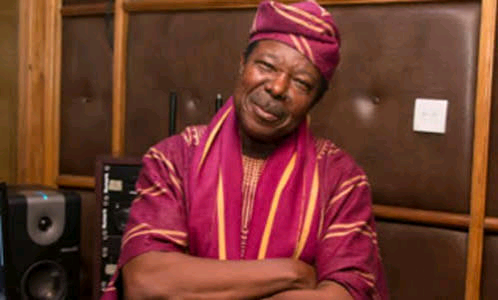
From the dusty beginnings of a young royal-born dreamer to the world’s stages, Grammy recognition and six decades of musical influence, King Sunny Ade has lived a story bigger than the music itself. At 80, the King is still standing. And the crown still fits.
There are musicians who make music.
There are musicians who make history.
And then there are those rare few whose music becomes part of the history of a people.
King Sunny Ade belongs in that last category.
On September 22, 1946, in Ondo, then part of the Western Region of Nigeria, a boy named Sunday Adeniyi Adegeye was born into a family with royal connections. He would eventually become the man Nigerians know as King Sunny Ade ,KSA, the King of Juju Music.
Eight decades later, the story is almost unbelievable.
The boy who walked away from the conventional path did not merely become a musician.
He became a cultural institution.
He did not merely sing in Yoruba.
He carried Yoruba sound across oceans.
He did not merely entertain Nigerians.
He helped introduce generations of international listeners to a distinctly Nigerian musical language.
And at 80, King Sunny Ade is not simply celebrating a birthday. He is celebrating a legacy.
FROM ROYAL ROOTS TO THE RHYTHM OF THE STREETS
Sunny Ade’s beginnings were anything but ordinary.
Born into a family with royal connections, he grew up around Osogbo and came from the Adesida royal lineage associated with Ondo and Akure. His father was a church musician/organist, while his mother was a trader.
But royalty did not dictate his destiny.
Music did.
As a young man, Sunny Ade was drawn increasingly toward performance. Rather than follow the conventional educational route expected of him, he moved deeper into music.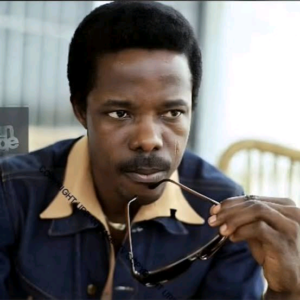
His professional journey took him into the orbit of one of the giants of Nigerian entertainment at the time, Moses Olaiya, the legendary Baba Sala, and his Federal Rhythm Dandies. There, Sunny Ade gained valuable experience before establishing his own musical identity.
Then came 1967.
A young Sunny Ade formed his own band, initially known as the Green Spots. The group would later become the African Beats, the band that would become inseparable from his rise as a jùjú superstar.
The journey had begun.
And Nigeria was about to hear something different.
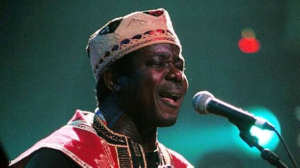
THE GUITAR, THE TALKING DRUM AND A NEW SOUND
Sunny Ade did not simply inherit jùjú.
He stretched it. Bent it. Electrified it. Expanded it. And took it somewhere new.
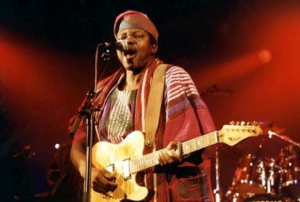
His music brought together guitars, talking drums, percussion, vocals and Yoruba rhythmic traditions, while incorporating innovations such as electric and pedal-steel guitar, synthesised sounds and increasingly elaborate arrangements.
His performances were equally revolutionary.
The band was not merely there to stand and play.
They moved.
They danced.
They performed.
The music became theatre.
The sound became spectacle.
And Sunny Ade became known not only for his musicianship but for his extraordinary stagecraft.
His music found a natural home in Nigeria’s social life weddings, celebrations, parties, chieftaincy ceremonies and gatherings where people did not merely listen to music.
They lived it.
By the 1970s, he had established himself as one of the dominant figures in Nigerian jùjú music.
But Sunny Ade was already thinking beyond Nigeria.
WHEN THE KING BUILT HIS OWN KINGDOM
There was another side to KSA’s genius that is sometimes forgotten.
He was not only an artiste. He was an entrepreneur.
After disagreements within the Nigerian recording industry, Sunny Ade established his own record label in the 1970s, giving himself greater control over his music. Sources document the creation of Sunny Alade Records around 1974–75.
He also established the Ariya nightclub in Lagos, which became an important performance base for the African Beats.
Think about that for a moment.
At a time when many African musicians depended almost entirely on record companies and promoters, Sunny Ade was building his own musical ecosystem.
He was making music.
He was managing musicians.
He was recording music.
He was promoting music.
He was building a business around music.
The King was already thinking like a kingdom-builder.
THEN THE WORLD CAME KNOCKING
And then came the 1980s.
The decade that changed everything.
In 1982, Sunny Ade signed with the internationally renowned Island Records, the British label that had played a major role in taking reggae and other Caribbean sounds to international audiences. His album Juju Music introduced his sound to a much wider global audience.
Suddenly, the sound of Yoruba jùjú was travelling.
London.
New York.
Europe.
America.
The international press began paying attention.
The African Beats were no longer performing only for Nigerian audiences.
The world was dancing.
Sunny Ade’s international rise was so significant that he was marketed in some quarters as an African counterpart to Bob Marley. But there was one crucial difference:
He was not reggae.
He was Sunny Ade.
He was jùjú.
He was Yoruba.
He was Nigerian.
And he was taking that identity with him.
THE GRAMMY MOMENT
Then came another historic milestone.
Synchro System, released in 1983, earned Sunny Ade a nomination at the Grammy Awards in the category then known as Best Ethnic or Traditional Folk Recording.
The significance was enormous.
He became the first Nigerian artist to receive a Grammy nomination.
The Recording Academy’s records show that KSA has received two Grammy nominations: Synchro System in 1984 and Odu in 1999.
No, he did not win.
But the nomination itself was historic.
Because suddenly, a Nigerian jùjú musician was being discussed on one of the world’s biggest music platforms.
And that door did not close behind him.
THE STEVIE WONDER CONNECTION
Sunny Ade’s international adventure also brought him into contact with some of the world’s biggest musicians.
Among them was Stevie Wonder.
Wonder contributed harmonica to Sunny Ade’s Aura, released in 1984.
That collaboration was another reminder of something Sunny Ade had demonstrated repeatedly:
African music did not have to abandon its identity to enter the global room.
It could walk into that room carrying its own drums.
Its own language.
Its own rhythm.
Its own story.
WHEN THE INTERNATIONAL SPOTLIGHT MOVED ON
The global music industry can be ruthless.
Today’s sensation can become tomorrow’s forgotten headline.
Sunny Ade’s international relationship with Island Records eventually ended after the release of Aura. The album did not match the commercial expectations surrounding his earlier international releases, and the partnership ended.
But something important had already happened.
The world had heard him.
And more importantly, the world had heard jùjú.
Sunny Ade returned his focus largely to his home audience and continued touring and recording over the decades.
That is where another part of his greatness lies.
He did not disappear because the global spotlight moved elsewhere.
He kept working.
THE KING NEVER LEFT THE THRONE
Music changed.
Nigeria changed.
The record industry changed.
Cassette gave way to CD.
CD gave way to digital downloads.
Downloads gave way to streaming.
Afrobeats emerged and conquered international charts.
A new generation of Nigerian superstars, from Fela Kuti’s successors to contemporary Afrobeats giants took Nigerian music into new territories.
But somewhere in the story remained the unmistakable fingerprints of pioneers like Sunny Ade.
Long before Nigerian music became a global commercial force, he had already demonstrated that a distinctly Nigerian sound could travel internationally without losing its soul.
That is part of his relevance today.
He belongs to a generation that built the road on which today’s global Nigerian music travels.
THE LAURELS KEEP COMING
The honours have followed the journey.
In 2008, Sunny Ade was recognised for his contribution to world music at the International Reggae and World Music Awards at the Apollo Theater in New York. In 2009, he was inducted into the Afropop Hall of Fame at the Brooklyn African Festival.
In 2016, he received an AFRIMA honour and became the first Nigerian inducted into the Hard Rock Café Music Memorabilia collection in Lagos. He donated a vintage Fender guitar among other memorabilia, including an instrument associated with his Synchro System era.
In 2021, he was inducted into The Headies Hall of Fame.
These are not merely plaques.
They are markers along a six-decade journey.
MORE THAN MUSIC
Sunny Ade’s relevance also extends beyond records and concert halls.
His music has appeared in international films, including Breathless and One More Saturday Night, while he also appeared in Robert Altman’s O.C. and Stiggs.
He has collaborated with artists across generations and musical cultures, including Stevie Wonder and Manu Dibango.
He has also been involved in music education and industry leadership, including service connected to Nigeria’s copyright administration and recognition for his contribution to music.
In other words, the King has spent decades doing more than producing songs.
He has been part of the architecture of Nigerian music.
WHY KING SUNNY ADE STILL MATTERS AT 80
This is perhaps the most important question.
Why should an artiste whose career began more than six decades ago still matter in an industry now dominated by Afrobeats, streaming numbers, social media virality and young global stars?
Because relevance is not always about being the newest name in the room.
Sometimes, relevance is about being part of the reason the room exists.
Today’s Nigerian music industry enjoys a global audience that earlier generations could only imagine.
But before Afrobeats became a global brand, musicians such as Sunny Ade were already carrying Nigerian rhythms across borders.
Before social media could turn an artiste into a global sensation overnight, Sunny Ade spent decades building audiences through records, radio, live performances and relentless touring.
Before “African music” became a fashionable global category, he was insisting that African music could stand on its own terms.
And perhaps most importantly, he showed that modernisation did not have to mean cultural erasure.
He could embrace the electric guitar without abandoning the talking drum.
He could use modern production without abandoning Yoruba musical traditions.
He could perform before international audiences without pretending to be anything other than himself.
That is the lesson.
EIGHTY YEARS. SIX DECADES. ONE CROWN.
At 80, King Sunny Ade’s story reads like a Nigerian musical epic.
A royal-born boy.
A young man drawn to rhythm.
A guitarist finding his voice.
The Green Spots.
The African Beats.
The King of Jùjú.
The international breakthrough.
Island Records.
Juju Music.
Synchro System.
Grammy nominations.
Stevie Wonder.
World tours.
Awards.
Halls of fame.
Generations of musicians.
And an identity that never stopped being Nigerian.
President Bola Ahmed Tinubu, in a birthday tribute, described Sunny Ade as an exemplar of “musical excellence and cultural ambassadorship,” praising his role in transforming jùjú music into a globally recognised Nigerian cultural treasure.

But perhaps the most powerful tribute is not contained in a presidential statement.
It is in the music itself.
Because somewhere today, an old record is still spinning.
Somewhere, a talking drum is still answering a guitar.
Somewhere, a Nigerian family is still dancing.
Somewhere, a young musician is discovering the sound that came before him.
And somewhere beyond Nigeria, somebody is still hearing that unmistakable rhythm and asking:
“What is this sound?”
The answer is simple.
This is Nigeria.
This is jùjú.
This is history.
This is King Sunny Ade.
At 80, the voice may belong to another era.
But the rhythm has refused to grow old.
The King is 80.
The crown remains.
The drums are still talking.
And the music still knows the way home.
About The Author